
Signs Your Basement Slab Needs Replacement, Not Another Patch
A crack that opens back up months after being sealed usually means moisture is still getting into the concrete around it, not that the patch itself was applied wrong. Underneath a slab poured straight onto soil, ground moisture has nowhere else to go, and it works its way up through cracks, seams, and porous concrete no matter how many times the surface gets sealed. That constant moisture breaks down the patch and the concrete around it, leaving a basement that never fully dries out between repairs. A full slab replacement rebuilds the floor with drainage, a vapor barrier, and insulation underneath it, so the moisture causing the damage gets addressed instead of resurfacing every season.
How to Recognize a Failing Basement Slab
Your basement doesn’t have to look damaged for something to be wrong with the slab underneath it. The way your basement feels from day to day can point to a slab that’s already failing. Paying attention to those details gives you the chance to plan a slab replacement on your own schedule. If your home sits on one of the older, uninsulated slabs found throughout Massachusetts and Rhode Island homes, this pattern is worth watching for.
Basement Dampness That Won’t Go Away
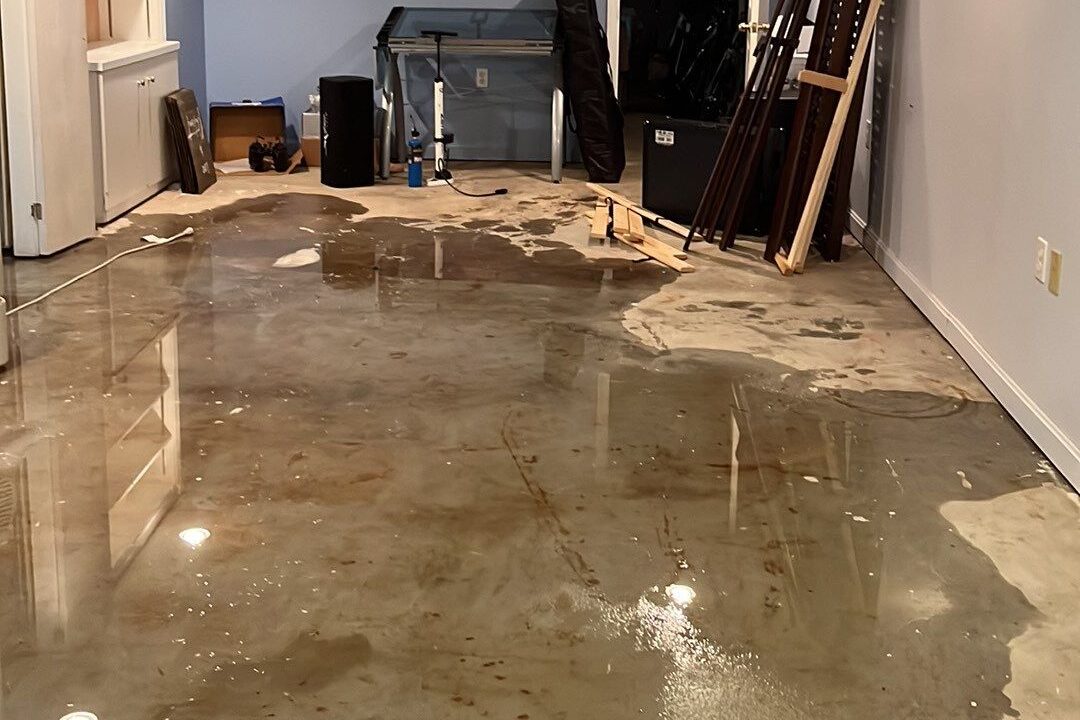
Your basement floor feels damp to the touch even when it hasn’t rained recently, or you notice condensation forming on the concrete during humid stretches. Under older Massachusetts and Rhode Island homes, that moisture moves up directly through the slab itself.
Cracks That Keep Reopening
You’ve had a crack sealed before, and it’s back, sometimes in the same spot and sometimes running a few inches further than last time. Each time it reopens, it’s a sign the moisture behind it never actually stopped moving through the concrete.
A Musty Smell That Sticks Around
The basement has a smell you can’t quite place, and it doesn’t clear up with airing the space out. That odor usually comes from moisture trapped in and against the slab itself.
Visible Mold on the Floor or Nearby Surfaces
You’ve spotted mold along the base of the walls, on stored boxes, or directly on the concrete, and cleaning it only keeps it from coming back for a few weeks at a time. Mold needs a moisture source to keep growing, and a slab letting groundwater through gives it a constant one.
Cold Floors Even With the Heat Running
Your basement floor stays cold underfoot no matter how warm the rest of the house feels, and it’s noticeably worse in the winter months. An uninsulated slab poured straight onto soil has nothing stopping heat from moving down into the ground below it.
Uneven or Settling Areas of the Floor
Part of your basement floor feels lower or slopes differently than the rest, or you’ve noticed a spot where furniture doesn’t sit level anymore. Settling in one section of an older slab often means the ground underneath has shifted or eroded in that specific area.
Why Sealing or Covering the Slab Doesn’t Solve It
A waterproof coating painted over the slab surface blocks moisture at the top layer of concrete, but the ground underneath keeps pushing moisture up through the material itself. Coatings crack and peel as that pressure builds against them, and once they fail, the moisture reaches the room the same way it did before the coating went on.
A plastic vapor barrier or sheeting laid loosely over the slab works the same way. It covers the surface without changing what’s happening in the concrete underneath it, so humidity collects between the plastic and the slab. Both approaches treat the top of the slab as the problem when the moisture is actually coming from below it.
What Happens When You Keep Patching the Same Crack
A patch fills the visible crack, but it doesn’t change how moisture is moving through the rest of the slab. The concrete around the patch is still under the same pressure that caused the original crack, so a new one often opens nearby within a season or two. Homeowners who patch the same area two or three times are usually dealing with a slab that’s breaking down across its whole surface, not just at that one spot. A full slab replacement addresses the entire floor at once, with drainage and a vapor barrier built in underneath it, so new cracks don’t keep forming in different places after the work is done.
Get a Plan for Your Basement Slab
If any of this sounds like what’s happening in your basement, a free inspection tells you exactly what’s going on underneath the floor and what a slab replacement would involve for your specific home. Drycrete has worked on basements across Massachusetts and Rhode Island for more than 30 years, and every recommendation comes with a written estimate before any work starts, so you know exactly what you’re getting and why. Request a free quote and get a plan for your slab replacement before the next patch fails.