Basement & Foundation Waterproofing in Boston

Basement Waterproofing in Boston, MA

Basement waterproofing in Boston means working on some of the oldest housing stock in the country, where close to 40 percent of homes were built before 1940. The triple-deckers across Dorchester, Roxbury, and Mattapan sit on fieldstone and rubble foundations that let water through far more easily than poured concrete, and the row houses and single-families closer to the harbor sit on filled land where the water table never drops far below the slab. When groundwater rises against a foundation like that, it finds the seams and pores it has always used, storm after storm and season after season.

Drycrete Waterproofing has spent more than 30 years solving basement leaks across Boston and Eastern Massachusetts, with over 11,000 projects completed and more than 800 five-star reviews. From interior French drains and sump pumps to foundation crack repair and applied waterproofing, every system is sized to the foundation in front of it. If your basement floods after a Nor’easter, smells musty in summer, or leaks through a wall crack every spring, a free inspection tells you what you are dealing with and what it costs to fix.

Why Boston Basements Take on Water

A lot of Boston isn’t natural land at all. Neighborhoods like Back Bay, the South End, and parts of South and East Boston were built on landfill, dirt and gravel dumped into the harbor and tidal flats to make new ground over a century ago. That fill holds water like a sponge and sits low, close to sea level, so the water table stays high all year. The higher neighborhoods like West Roxbury and Brighton don’t have the fill, but they sit on thick glacial clay that drains just as poorly. Either way, when a Nor’easter or spring snowmelt soaks the ground, the water doesn’t run off. It pools around your foundation and stays. That waterlogged soil pushes against your walls and floor, and the pressure forces water through any gap it can find.

Many of Boston’s homes were built before 1940, and the triple-deckers and older single-families across Dorchester, Roxbury, and Mattapan often sit on fieldstone foundations, walls built from stone and mortar instead of poured concrete. After a hundred Boston winters, that mortar crumbles out of the joints and water seeps straight through. Most of these homes were built without any drain at the base of the foundation, so whatever reaches the wall ends up inside.

Boston’s coastal winters make it worse. Temperatures swing above and below freezing over and over instead of staying locked down, and each time, water in a crack freezes, expands, and pries the gap a little wider before it melts and seeps deeper. By spring, a hairline crack that held last year can be wide enough to leak. The rain you could route away from the house often runs right at it too, off a downspout next to the foundation, out of a clogged gutter, or down a yard that slopes toward the wall. Which of these is behind your wet basement is what a free Drycrete inspection is for.

Signs of a Wet Basement and Foundation Problem

A musty smelling basement is usually the first thing you notice, and it hits the moment you open the door. The smell gets stronger through Boston’s humid summers, when mold and mildew feed on the damp walls, floor, and anything stored against them.

Puddles in the basement show up in the low corners after heavy rain or a Nor’easter, and water seeps through the walls or across the floor overnight. The marks stay after everything dries: a dark tide line near the base of the wall, white powder crusting the stone or concrete (efflorescence, the mineral deposit water leaves as it dries through the wall), and paint that bubbles and peels.

Basement wall cracks are the foundation showing strain. The thin ones weep during a storm and the wider ones keep growing, and a stone or block wall can bow or lean inward where years of wet soil have pushed against it from outside. Stair-step cracks through the mortar joints point the same way. Catch them early, before a leak turns into a structural repair.

A cold, damp basement gives it away even when the floor looks dry. Pipes and windows sweat, and a store-bought dehumidifier runs nonstop without catching up. A free Drycrete inspection traces each sign back to where the water is getting in and what it takes to stop it.


Our Basement Waterproofing Services in Boston, MA

Drycrete waterproofs Boston basements from the inside, which is usually the only practical option on the city’s tight lots and shared row-house walls where there’s no room to dig around the foundation. After the inspection pins down where water is getting in, the system is built from the pieces that fit the home. Most jobs combine a few of these:

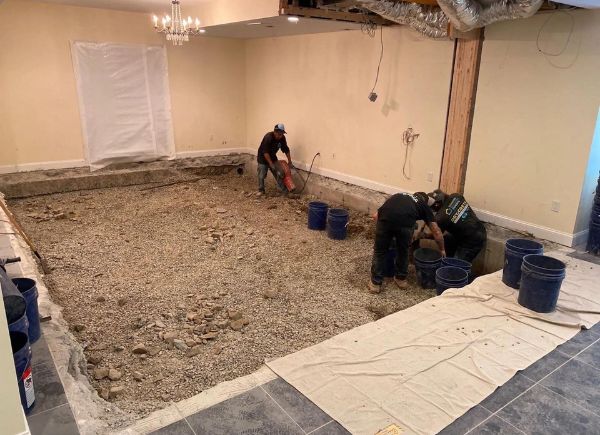
  • Interior French Drain Systems. A drain channel is set into the floor along the inside edge of the foundation, where it catches water as it comes through the wall and floor seam and carries it to the sump pump. The trench is sealed back under fresh concrete when the work is done.
  • Sump Pump Installation and Replacement. The pump collects the water the drain brings in and moves it out and away from the house. Battery backup keeps it running through the power outages that come with every big Boston storm.
  • Foundation Crack Repair. Cracks that leak get sealed from the inside to stop water and keep the gap from spreading. Drycrete has handled concrete crack repair for more than 30 years.
  • Applied Waterproofing and Vapor Barriers. For walls that stay damp or weep through the stone, a waterproof coating and a wall liner block the moisture and cut the humidity feeding mold and that musty smell.
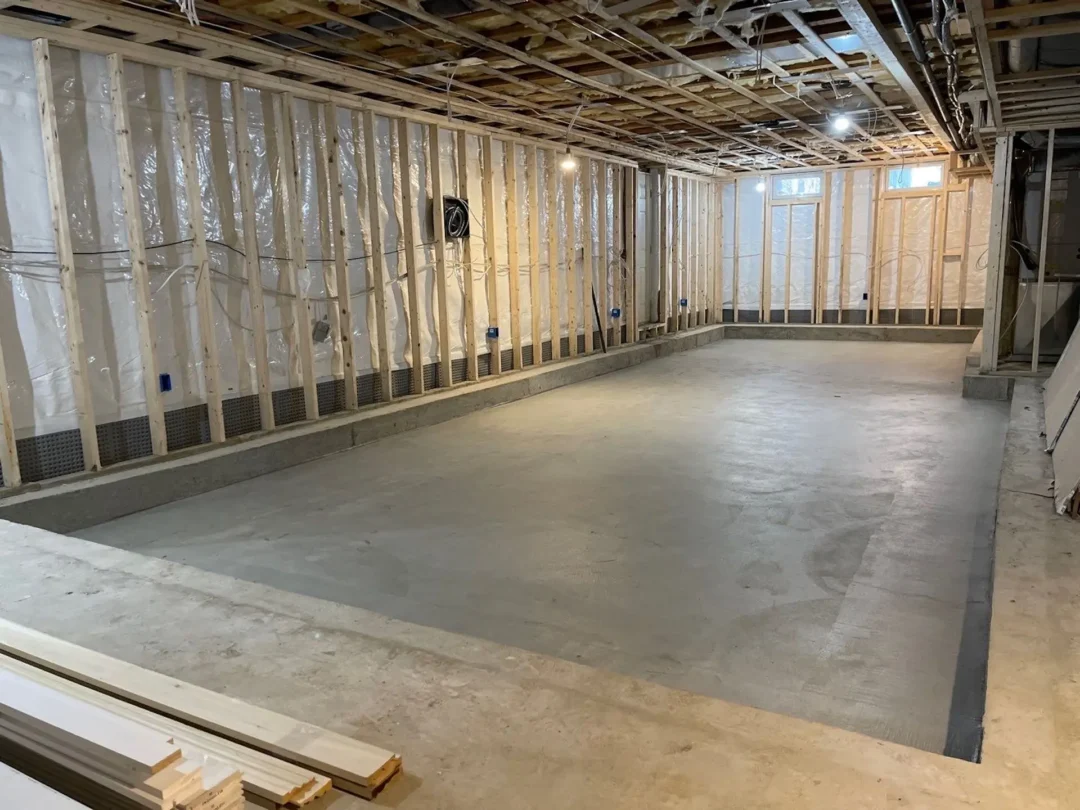
  • Basement Dig Outs. Lowering the floor in a shallow older basement adds headroom and makes room for a proper drainage system underneath. It turns a cramped, damp cellar into space you can actually use.
  • Window Well Installations. Below-grade basement windows collect water against the glass and leak through the frame. A proper window well drains that water away before it gets in.

The right mix depends on the foundation, the neighborhood, and how the water is moving at your address, which is what the free inspection sorts out before any work is quoted.

Why Boston Homeowners Choose Drycrete

Drycrete has spent more than 30 years on Boston basements, long enough to know what’s behind your walls before the inspection starts: the fieldstone foundations under the triple-deckers, the high water table in the filled-land neighborhoods, the way an old row house takes on water when there’s no way to reach it from outside. More than 11,000 completed projects and over 800 five-star reviews across Greater Boston stand behind that experience.

The work starts with a free inspection and no sales pressure. You get a straight read on where the water is coming in and what it takes to stop it, with a written quote before anything begins, and no one pushing a bigger system than the problem calls for.

Every job is backed by a long-term warranty, so a basement that’s dry when the crew packs up stays dry through the seasons that test it. If you’re collecting quotes right now, the difference is a company that has solved this exact problem on Boston homes thousands of times and puts the fix in writing.

Schedule a Free Basement Inspection in Boston

A wet basement only gets more expensive the longer it sits, as the water works deeper into the foundation and the damp spreads to everything stored down there. Booking the inspection is the step that stops the clock.

A Drycrete specialist comes out, finds where the water is getting in, and explains what it takes to keep it out, with a written quote and no pressure to decide on the spot. You’ll know what you’re dealing with whether you move forward or not.

Drycrete serves Boston and the surrounding communities, from Dorchester and West Roxbury to Brighton and beyond. Request your free inspection today and find out what a dry basement is going to take.

Over 11,000 Appreciative Customers

Reviews

5.0

5/5

Over 800 reviews

Our Featured Work

Look at some of the projects we recently worked on.