Foundation movement travels up through the framing into the rooms you use every day, so a foundation that has settled or shifted even a fraction of an inch can leave doors dragging in their frames, windows stuck in place, and cracks spreading across the plaster. Across eastern Massachusetts and Rhode Island the ground keeps that movement going, as glacial clay swells and shrinks with the seasons and winter frost reaches four feet down. Our structural foundation repair services correct the underlying cause and stabilize the foundation, stopping the settling and bowing before it worsens.

Drycrete Waterproofing has spent more than 30 years securing foundations across the region, with over 11,000 completed projects behind that work, and a free on-site assessment gives you a straight answer on what your foundation needs.
The signs of a structural problem in your foundation usually turn up in your living space, far from the basement where the trouble begins. When something in the house looks like it has shifted or stopped working the way it should, that is worth a closer look. Older homes across eastern Massachusetts and Rhode Island carry enough small quirks that a genuine structural issue can blend right in with them. Knowing what separates the two lets you catch a real problem while the repair is still simple and contained.
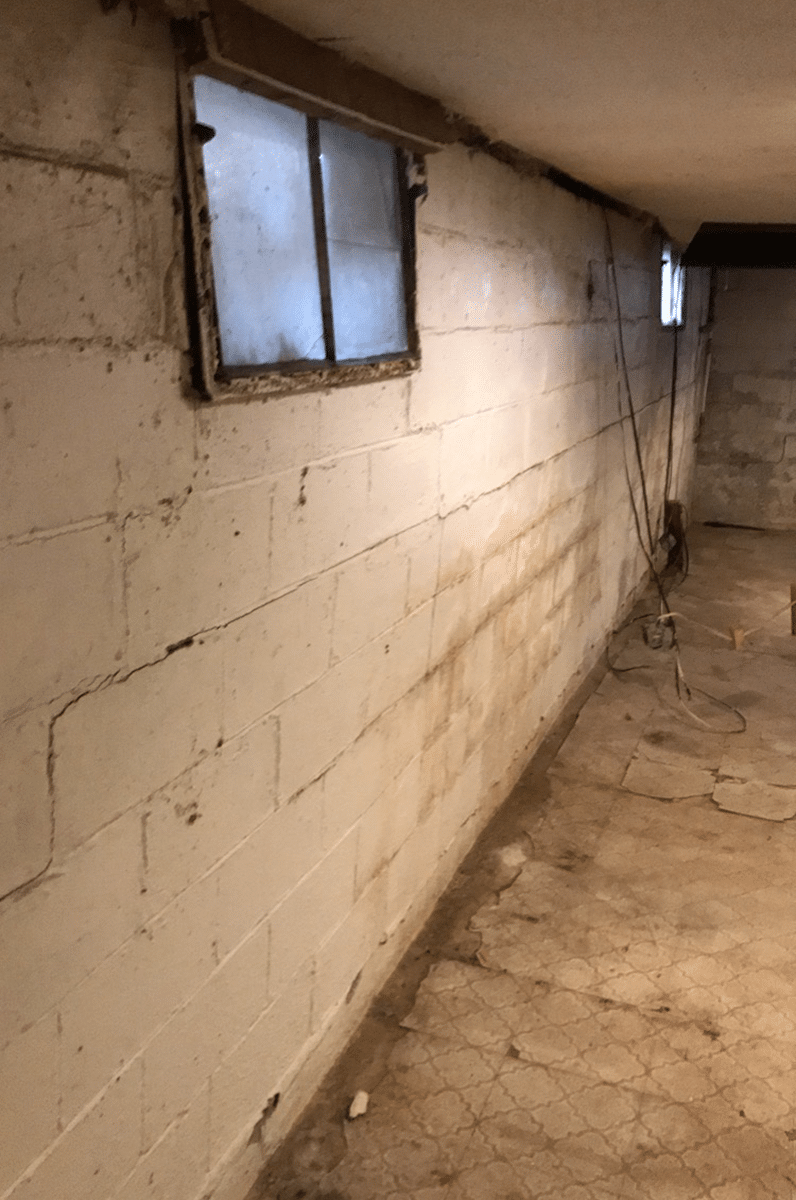
Down along a block or brick wall you find a crack that climbs from one corner in a stepped line, tracing the mortar joints as it rises. The mortar has crumbled out of the seams in places, and the gap sits wider at the top of the run than at the bottom. A break in that stair-step shape means one part of the foundation has dropped below the rest, the uneven kind of settling that happens when the clay under a footing shrinks through a dry stretch and stops carrying its share of the load. You may find the same stepped line repeated in the exterior brick above grade, following the movement all the way up the wall.
At the top corner of a door or window frame you notice a crack running out into the plaster on an angle, pointing away from the corner. Corners are where the stress concentrates when a house moves, so the wall surface gives there first as the framing above the foundation is pulled out of square. In a home sitting over eastern Massachusetts clay, a footing settling on one side of the house is enough to twist the frame and open these cracks. Winter presses on them harder, since the ground here freezes to four feet and heaves against the structure before letting it back down at the thaw.
A door that once swung shut on its own now drags against the jamb or scrapes the floor, or the latch no longer meets the strike plate and you have to lift the door to close it. Windows go the same way, stiffening in their tracks or leaving a wedge of daylight along one edge of the sash. When a foundation settles unevenly, the openings it frames fall out of square and the door or window binds against the new shape. The worst of it tends to land on whichever side of the house sits over the softest ground, where the footing has dropped the farthest.
Sight down the length of a basement wall and it no longer runs true, bulging inward near the middle or leaning in at the top. A horizontal crack often tracks across the block at the bend, where the wall is folding under the load behind it. This is the signature of lateral pressure, and around here that pressure comes from the dense glacial till packed into the ground. Till sheds water sideways and holds what it cannot drain, so a wet season leaves it heavy and pushing against the outside of the wall.
Cross a room and the floor tilts under your feet, or a ball set on the hardwood rolls off toward one wall on its own. Along the edges you might find gaps opening where the floorboards meet the baseboard, or a place near the center of the house that has gone soft and springy underfoot. Floors move when the support under them gives way, whether that is the footing around the perimeter or the columns carrying the middle of the house. In older homes on compressible clay, those interior supports can settle down into the ground and draw the floor down with them.
Any of these can have more than one explanation, so a reliable read comes from weighing them together across the whole house. A trained technician can separate settlement from wall pressure from worn interior supports, then match what they find to the repair it calls for. If this describes what you are seeing at home, a free on-site assessment from Drycrete Waterproofing puts an experienced eye on it before the movement goes further. More than 30 years of foundation work across eastern Massachusetts and Rhode Island stands behind that visit.
The right repair depends on what is moving and why, so an accurate diagnosis comes before any recommendation. A foundation that has settled needs its weight carried back down to stable ground, a wall bowing under soil pressure needs that pressure relieved, and columns or footings worn past their strength need replacing outright. Drycrete Waterproofing handles all three across eastern Massachusetts and Rhode Island, and a technician matches the method to the specific failure at your home. Getting that match right is what separates a repair that holds from one that has to be done twice.
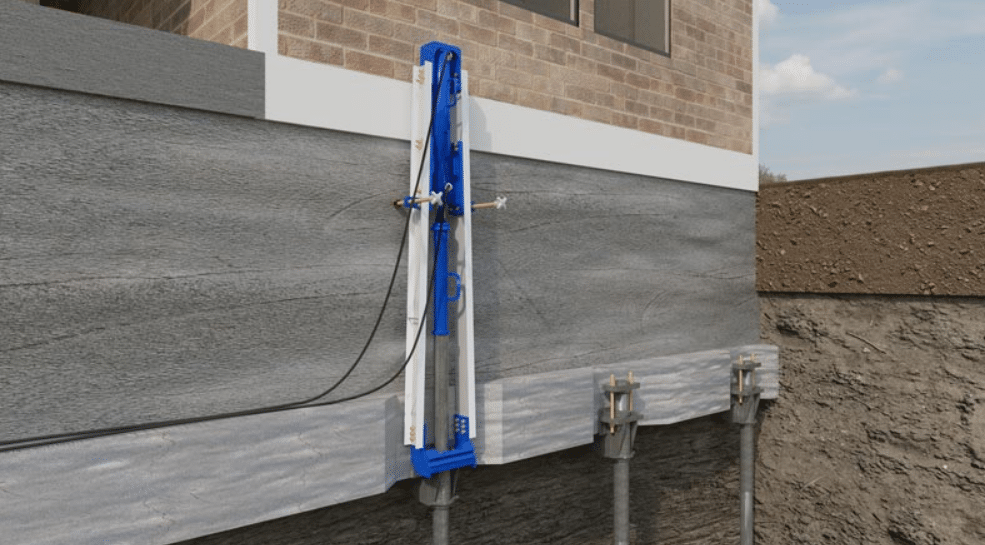
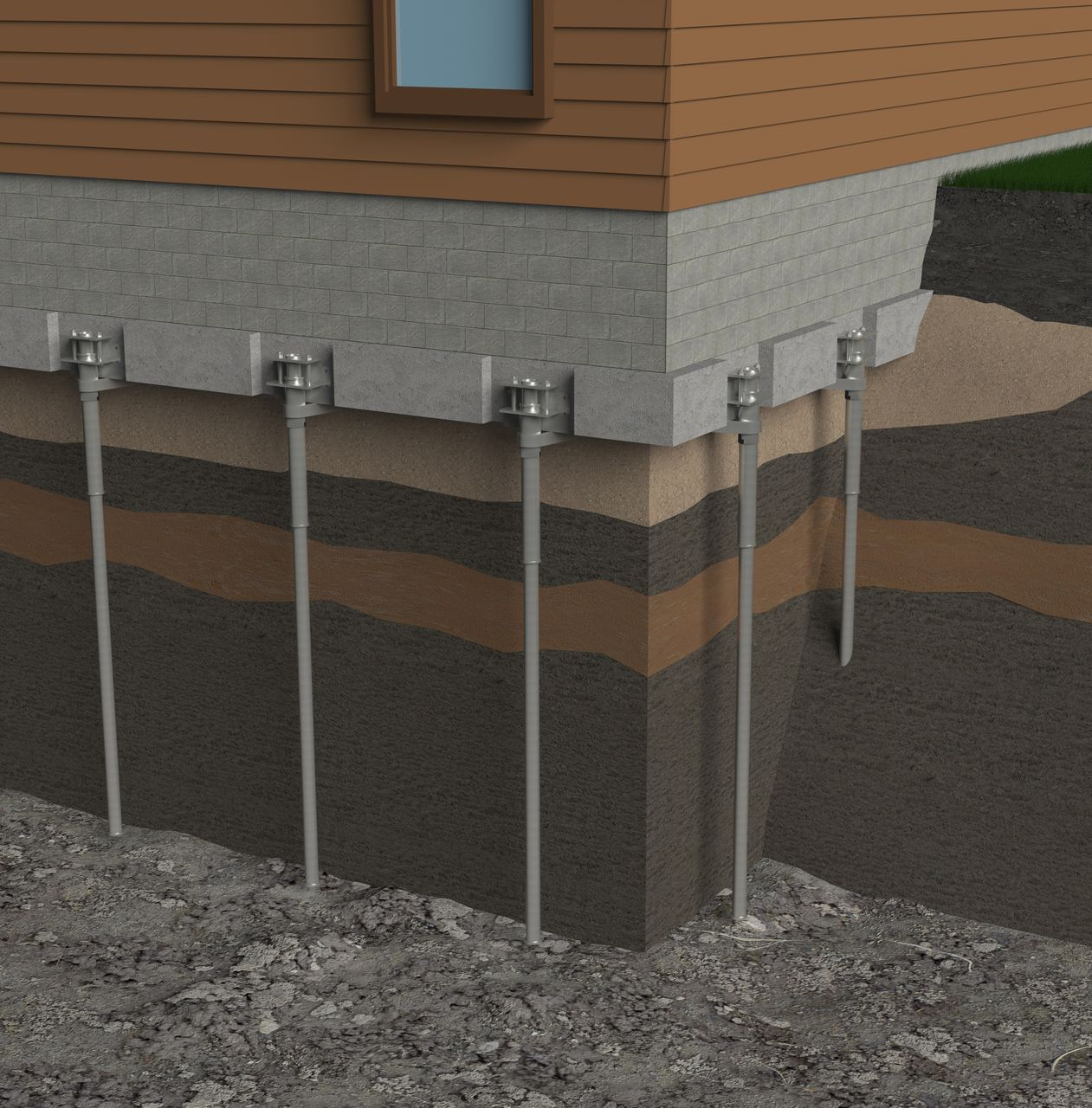
Push piers carry the weight of a settled foundation down to soil that can actually hold it. Each pier is a steel tube driven straight down through the failed upper clay until it reaches dense load-bearing strata or bedrock, and hydraulic force uses the weight of the house itself to seat it. Once the piers are set and the load transfers onto them the settlement stops, and where conditions allow, the crew can raise the sunken section back toward its original height. This is the repair for the dropped corner and the stair-step cracking that eastern Massachusetts clay produces when it shrinks and gives out beneath a footing.
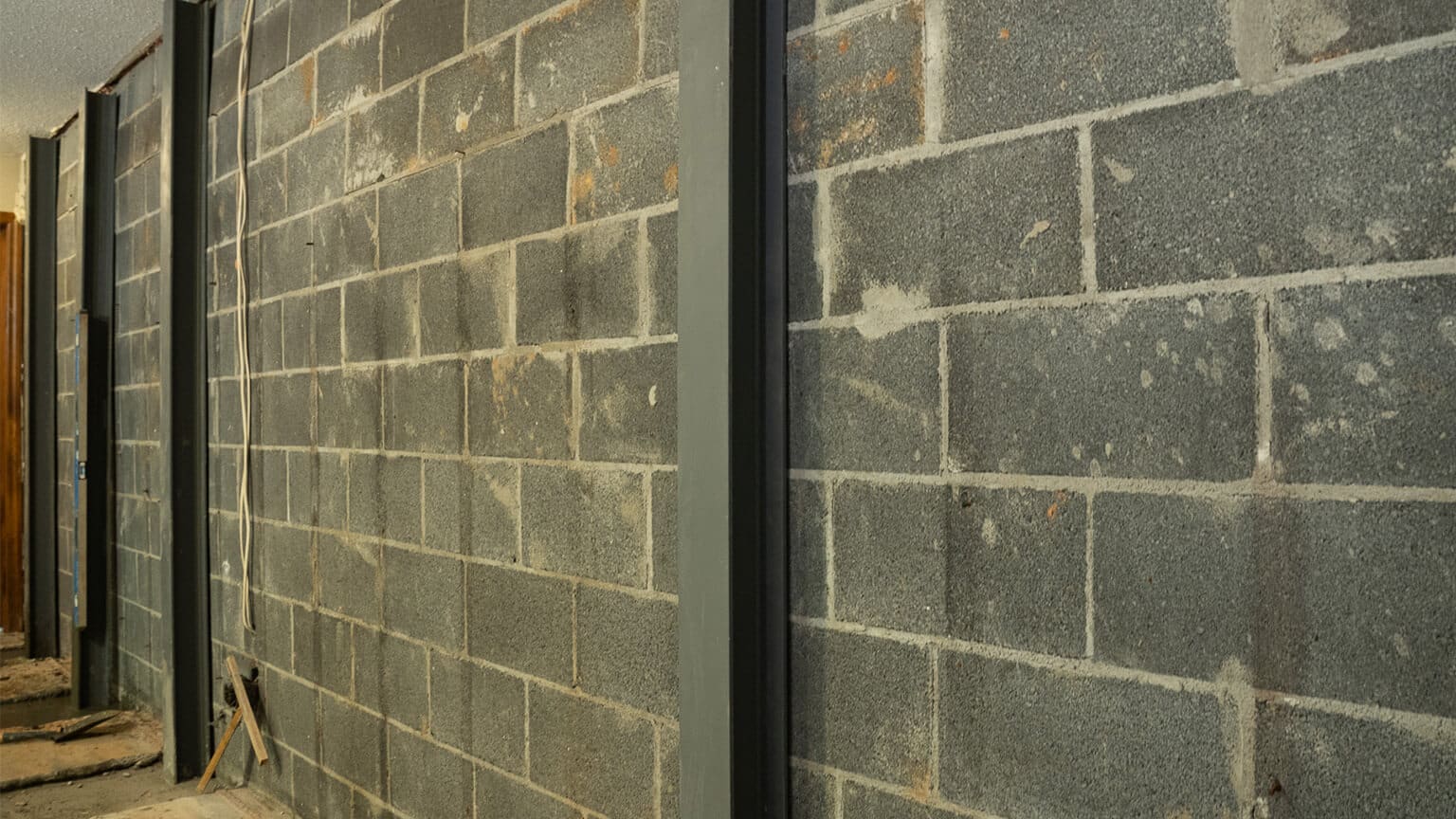
A bowing wall has moved under lateral pressure from the soil outside, and the repair takes that pressure off while holding the wall against any further movement. For a wall in the early stages of bending, carbon fiber strips bonded across the inside face lock it in place and stop the inward bow from advancing. For a wall that has leaned in farther, wall anchors reach out to stable soil beyond the foundation, and the crew draws the wall back toward plumb as the anchors are tensioned. Both answer the pressure that saturated glacial till builds against the outside of a wall through a wet New England season.
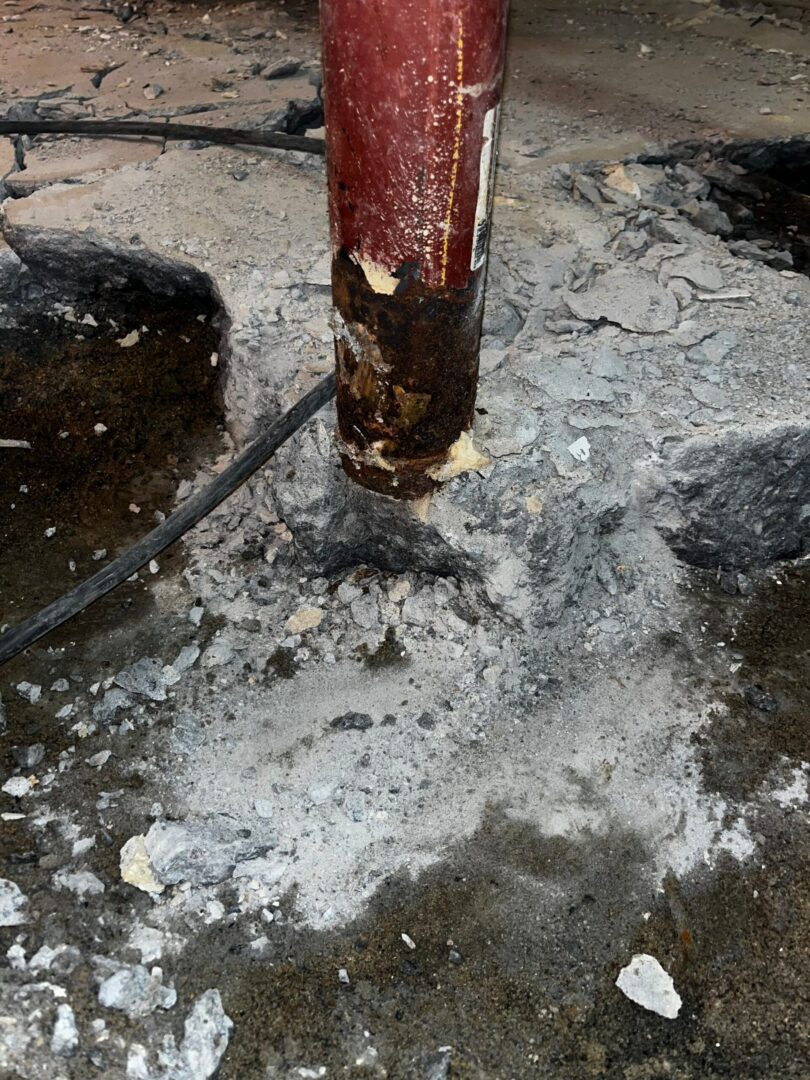
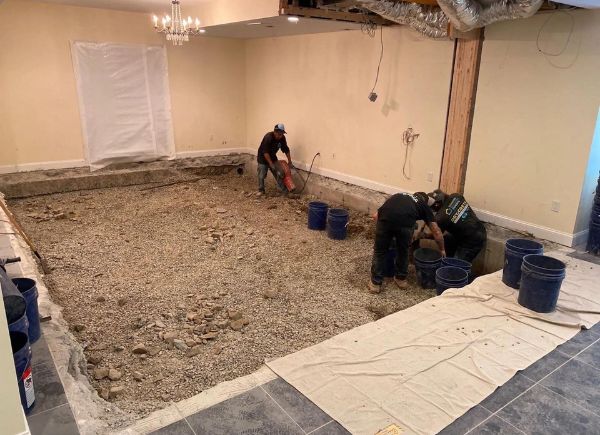
The Lally columns standing in your basement carry the main beam and everything the middle of the house rests on, and the footings under them spread that weight into the ground. A column rusted through at its base, bent, or never sized for the load it carries stops holding the beam at the right height, and the floors above begin to sag and slope. The footing can fail the same way, cracking or settling down into soft clay until the column it supports sinks along with it. Replacing a compromised column and pouring a proper footing beneath it puts firm, level support back under the center of the house and takes the give out of the floors overhead.
Each of these repairs answers one specific failure, which is why a foundation showing several symptoms at once sometimes needs two of them working together. A settled footing and a bowing wall on the same house call for piers on one side and anchors on another, sequenced so each holds while the next goes in. Pinning down that full picture at the assessment is what keeps the work from chasing a symptom while the real cause keeps moving. Drycrete’s technicians have spent decades reading eastern Massachusetts and Rhode Island foundations, and that experience is what turns a correct diagnosis into a repair that lasts.
Drycrete Waterproofing has spent more than 30 years repairing foundations across eastern Massachusetts and Rhode Island, with over 11,000 completed projects behind that work. That track record covers the same ground your home sits on, the Boston-area marine clay and the dense glacial till that drive most of the settlement and wall movement in the region. A crew that has worked those soils on thousands of houses reads a new one faster and more accurately, which keeps a diagnosis from sliding into guesswork. On a structural repair, that read is the difference between correcting the cause and treating a symptom that comes back.
That experience shows up in how homeowners rate the work. Drycrete holds a 5.0 rating across more than 800 reviews from customers around the region. Those reviews come off the same kind of house and the same soil problems you are facing, so they speak to how the company handles the conditions right here rather than somewhere else. A rating that steady over that many jobs is hard to fake and slow to earn.
Every repair begins with a free on-site assessment, where a technician inspects the foundation, pins down what is actually failing, and lays out the options in plain terms before anything gets scheduled. You come away with a clear account of the problem and the repair that fits it, and no pressure to decide on the spot. That upfront diagnosis is where a durable repair starts, since the method only works when it is aimed at the real cause. It is also where three decades of regional foundation work pay off most directly for you.
If you have seen any of the movement described here in your own home, the next step is a straightforward one. Book a free on-site assessment and a Drycrete Waterproofing technician will come out, inspect the foundation, and give you a clear read on what is happening and what it takes to fix. There is no cost for the visit and no obligation to schedule work afterward. You will know exactly what you are dealing with, which is where every sound repair begins.
Foundation movement does not hold still while you decide, and the cracks, sinking, and bowing only get more expensive to correct as they progress. Reach out through our contact page to set up your assessment, and put more than 30 years of eastern Massachusetts and Rhode Island foundation experience to work on your home.
5.0
Over 800 reviews