The Charles River defines Waltham’s southern edge, running west to east before passing under the Moody Street bridge and continuing toward the coast. It is a significant geographic fact for homeowners here, not just a scenic one. Waltham and Weston were flagged as a priority flood impact area in the Charles River Watershed Association’s regional flood model, and the USGS maintains an active gauge station on the river right at Waltham to track water levels year-round. Much of the city’s residential development grew up along the river during the mill town era, which means a substantial portion of the housing stock sits on or near former flood plain.
Away from the river, the picture does not improve much. Neighborhoods like South Side and Piety Corner are built on dense glacial till and clay subsoils left behind by retreating glaciers thousands of years ago. Clay holds water rather than draining it, and it shifts with the freeze-thaw cycle every winter. Add a 40-inch frost depth and seasonal snowmelt feeding back into already-saturated ground, and it becomes clear why wet basements are a routine complaint in this city, not an unusual one.
Drycrete Waterproofing has been working in Waltham and across eastern Massachusetts for over 30 years. In that time the company has waterproofed more than 11,000 homes throughout the region. Every evaluation is free and comes with a written estimate before any work begins.
When saturated soil has nowhere to drain, it pressurizes. That force pushing against foundation walls and floors is called hydrostatic pressure, and it does not require a major storm to build. A prolonged wet stretch is enough to push water through a crack that stayed dry all winter.
Stone foundations and unreinforced concrete block, common in older New England homes, were never designed to hold back saturated clay soil indefinitely. Decades of seasonal pressure eventually show up as seepage, cracks, and failing mortar joints. Poured concrete holds up better, but it is not immune. Cracks form at form ties, cold joints, and anywhere the concrete cured unevenly, and once water finds an opening, it follows the same path every time conditions are right.


Drycrete inspects basements across Waltham year-round, and the same signs come up repeatedly. Some homeowners have been looking at them for years without knowing what they mean. Here is what to watch for.
Seepage at the base of walls. Water coming in at the floor-wall joint points to hydrostatic pressure finding the path of least resistance. It tends to appear after heavy rain or during spring snowmelt when ground saturation peaks.
Efflorescence. The white powdery residue on concrete or block walls is mineral salt left behind when water moves through the masonry and evaporates. It confirms that water has been migrating through the wall repeatedly.
A sump pump running constantly. A pump cycling through a dry stretch indicates an elevated water table beneath the floor, not a problem with the pump itself.
A persistent musty odor. Humidity trapped in a below-grade space feeds mold and mildew. The smell often appears before any visible moisture does.
Cracks in walls or floors. Vertical and diagonal cracks in poured concrete are common as foundations shift over time. They become a water problem when hydrostatic pressure finds them.
Drycrete has been installing basement waterproofing systems in Massachusetts for over 30 years. The approach here is to assess the source of the problem first and recommend only what the home actually needs. Every evaluation is free and comes with a written estimate.
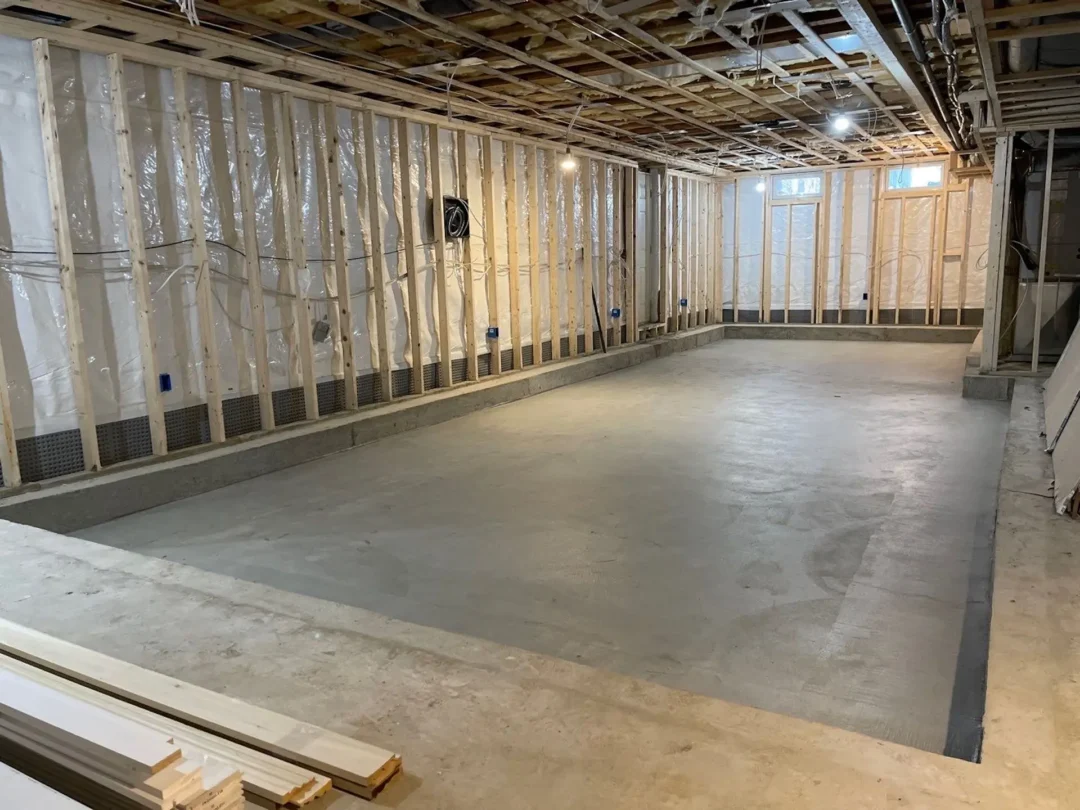
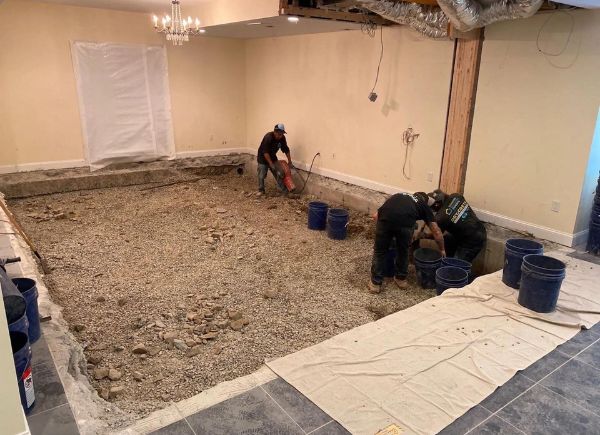
Interior French drain. A channel is cut along the perimeter of the basement floor, a perforated pipe is laid in gravel, and water that enters through the walls or floor is redirected to a sump pit before it can spread across the floor. It is the most reliable long-term system for basements dealing with hydrostatic pressure.
Sump pump installation. A sump pump removes water collected by the drainage system and discharges it away from the foundation. Drycrete sizes and installs pumps based on the volume of water the home is managing, including battery backup systems for power outages during storms.
Crack injection. Active leaks through poured concrete walls are sealed from the interior using polyurethane or epoxy injection. The material fills the crack through its full depth and bonds to the concrete.
Applied waterproofing. A waterproof membrane applied directly to interior masonry walls stops moisture from migrating through the wall surface. It is often used in conjunction with a drainage system rather than as a standalone fix.
Dehumidifier installation. A below-grade space that stays damp even after water intrusion is addressed will continue to support mold growth. Drycrete installs dehumidifiers sized for basement environments.
Drycrete has been waterproofing basements in Massachusetts and Rhode Island for over 30 years. That track record is not just a number. It means the company has worked through the full range of conditions this region produces, saturated clay soils, high water tables, aging foundations, and the seasonal pressure cycles that come with New England winters.
More than 11,000 homes have been waterproofed across the service area. Every job starts with a free inspection and a written estimate before any work is committed to. There are no subcontracted crews. The people who show up are Drycrete employees, which means the same standards apply on every job.
The company is licensed and insured and carries an industry-leading warranty on its waterproofing systems. For Waltham homeowners dealing with a wet basement, the first step is a free evaluation. Drycrete will assess the source of the problem, explain what is causing it, and provide a written estimate before any decisions are made.
At Drycrete, we never compromise our service or quality and that’s why we guarantee our waterproofing solutions. Call us now for fair pricing, high-quality products, and exceptional service that over 11,000 of your neighbors have trusted for their basement waterproofing needs.
5.0
Over 800 reviews