If you’re finding water in your basement after rain, dealing with a smell that won’t go away, or watching cracks in your foundation walls get a little worse each year, you’re not alone. It’s one of the most common calls we get from homeowners across Greater Boston, the South Shore, and throughout Rhode Island.
Drycrete Waterproofing has been fixing wet basements across Eastern Massachusetts and Rhode Island for over 30 years. More than 11,000 homeowners have trusted us with the job. We install complete waterproofing systems built around your home’s specific conditions, and every crack repair we do is guaranteed for as long as you own the house.
Water doesn’t wait, and neither should you. Call today for a free estimate.
Most basement water problems come down to one of four things: hydrostatic pressure, seepage, wicking, or humidity. Understanding which one you’re dealing with is the first step toward fixing it for good.
Every basement is essentially a hole in the ground. When the soil around your foundation gets saturated after a heavy rain or during spring snowmelt, water has nowhere to go. It builds up against your foundation walls and floor, and that pressure forces it inside. Hydrostatic pressure is one of the leading causes of basement flooding and wall cracks across Greater Boston and Rhode Island, and it doesn’t take a major storm to trigger it.
Seepage happens where your walls meet your floor, or through small gaps and cracks in the foundation itself. When water runs down the outside of your foundation wall during a rainstorm, it pools at the base and works its way under the wall and over the slab. It’s a slow process but a steady one, and it gets worse as cracks widen over time.
Clay soil is common across much of Eastern Massachusetts and Rhode Island, and it holds water long after a storm passes. If your basement floor sits on saturated clay, moisture wicks up through the concrete slab the way a sponge pulls water. You won’t see puddles. You’ll feel dampness, see discoloration, and find mold under boxes or rugs that sat on the floor too long.
In summer, warm humid air moves into cooler basement spaces and condenses on walls, pipes, and floors. It shows up as dark spots, beading on surfaces, and a persistent musty smell. A basement that feels dry in March can feel damp and uncomfortable by July without any water ever coming through the foundation.
Some basement water problems are obvious. Others show up quietly and get misread as normal wear on an older home. Here are the signs that mean water is actively working against your foundation.
A persistent odor is usually the first sign, even when the basement looks completely dry. Moisture trapped behind walls or under the slab creates the conditions mold needs to grow, and that smell can work its way into the rest of the house through the HVAC system.

That chalky white residue on your foundation walls has a name: efflorescence. It forms when water moves through concrete and leaves mineral deposits behind. It is not a cosmetic issue. It means water is actively seeping through your foundation walls.
Hairline cracks, discoloration, and streaks along basement walls or floors are signs of pressure building in the surrounding soil. Homes across Greater Boston and the South Shore see this frequently after heavy rain or the first warm weeks of spring when snowmelt saturates the ground fast.
Foggy windows, rust on metal fixtures, and damp wood framing all point to high humidity levels in the basement. Left alone, that moisture creates ideal conditions for mold, wood rot, and rust throughout the space.
If water pools along the edges of your basement or comes up through the slab after a storm, hydrostatic pressure is likely forcing it in. That pressure builds over time and will worsen foundation damage if it goes unaddressed.
Untreated basement moisture causes rot, mold, and foundation damage. It moves slowly, stays out of sight, and tends to get expensive before most homeowners realize how far it has spread.
The wood framing and floor joists that support your first floor sit directly above the basement. Prolonged moisture exposure causes them to rot, which weakens floors and creates structural problems that are expensive to fix. By the time you notice a soft spot in your kitchen floor, the damage underneath is usually significant.
Mold is the other major consequence. It thrives in humid, poorly ventilated spaces, spreads through wall cavities, and gets pulled into the rest of the home through the HVAC system. Remediation costs add up quickly, and the underlying moisture problem still needs to be solved after the mold is gone.
Beyond the structure, high humidity destroys drywall, buckles flooring, and ruins anything stored in the space. A basement that could be functional living area or clean storage becomes a problem room nobody wants to deal with.
Water pressure that builds against foundation walls over years will widen cracks and shift footings. What starts as a hairline crack becomes a structural repair that costs far more than waterproofing would have.
Most homeowners who call Drycrete wish they had called sooner.
Basement waterproofing isn’t a single product or a one-day fix. It’s a system of components that work together to keep water out permanently. What your home needs depends on how water is getting in, what the soil conditions are like, and what you plan to do with the space.


Drycrete designs and installs complete waterproofing systems for homes across Eastern Massachusetts and Rhode Island. Every solution is built around your specific situation, not a standard package.
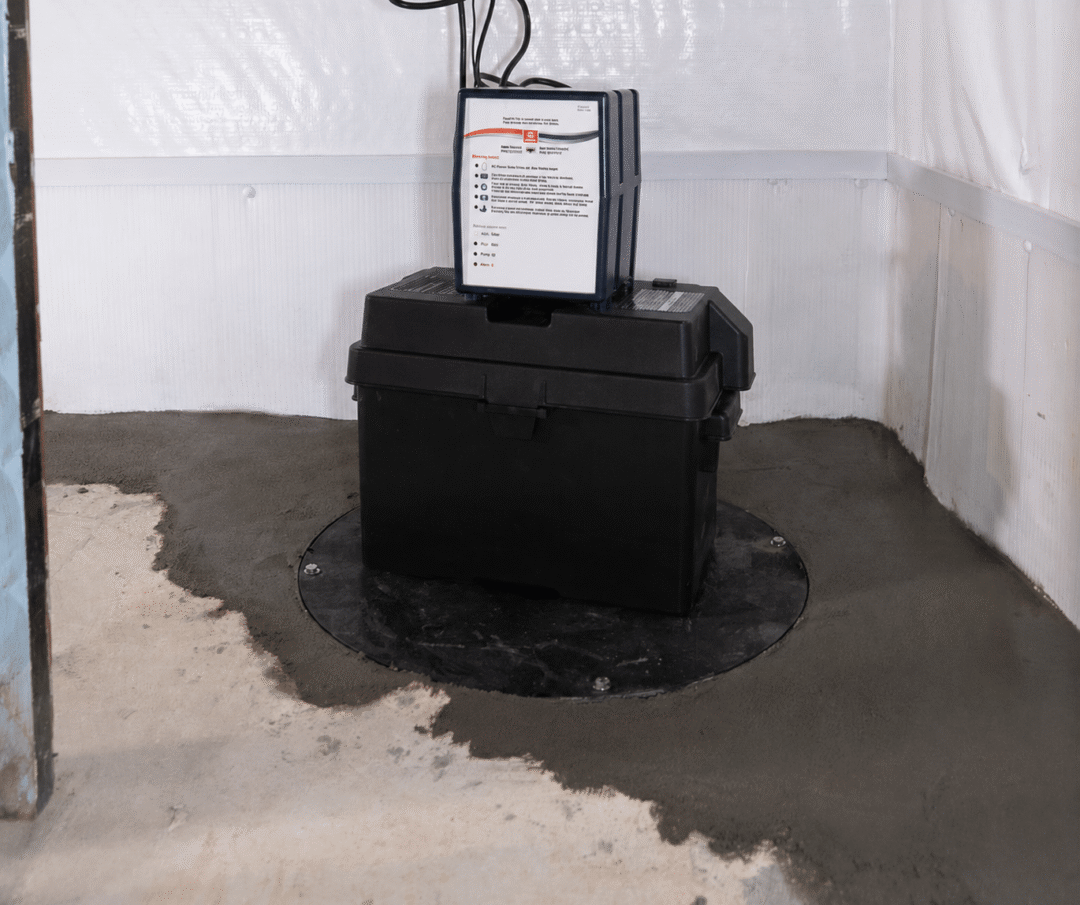
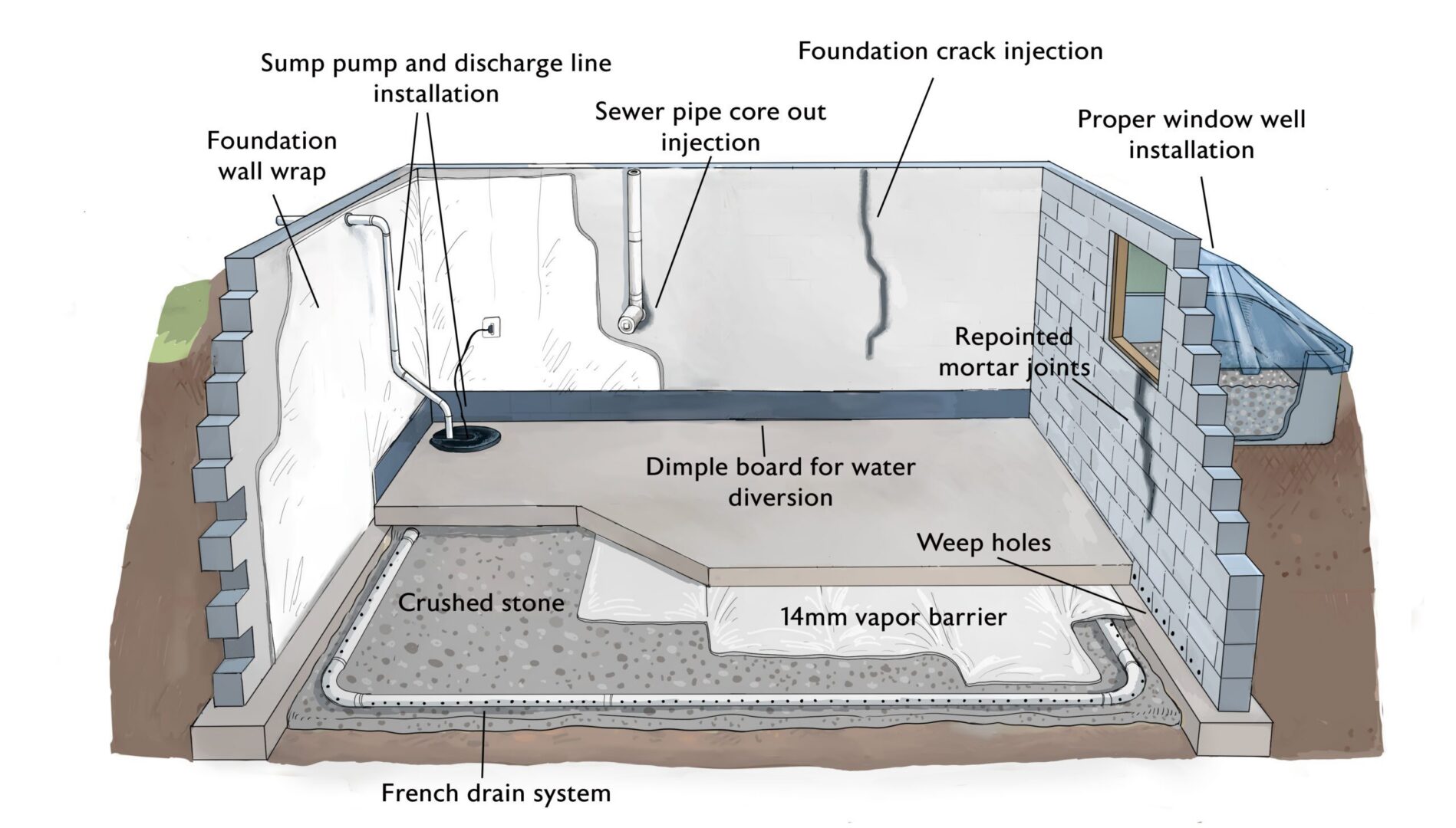
A sump pump is the core of most basement waterproofing systems. It sits in a pit at the lowest point of your basement, and when water enters the pit, the pump activates and pushes it out of the house and away from the foundation. For homes in Greater Boston and across Rhode Island where heavy rain and snowmelt regularly saturate the ground, a properly installed sump pump is not optional.
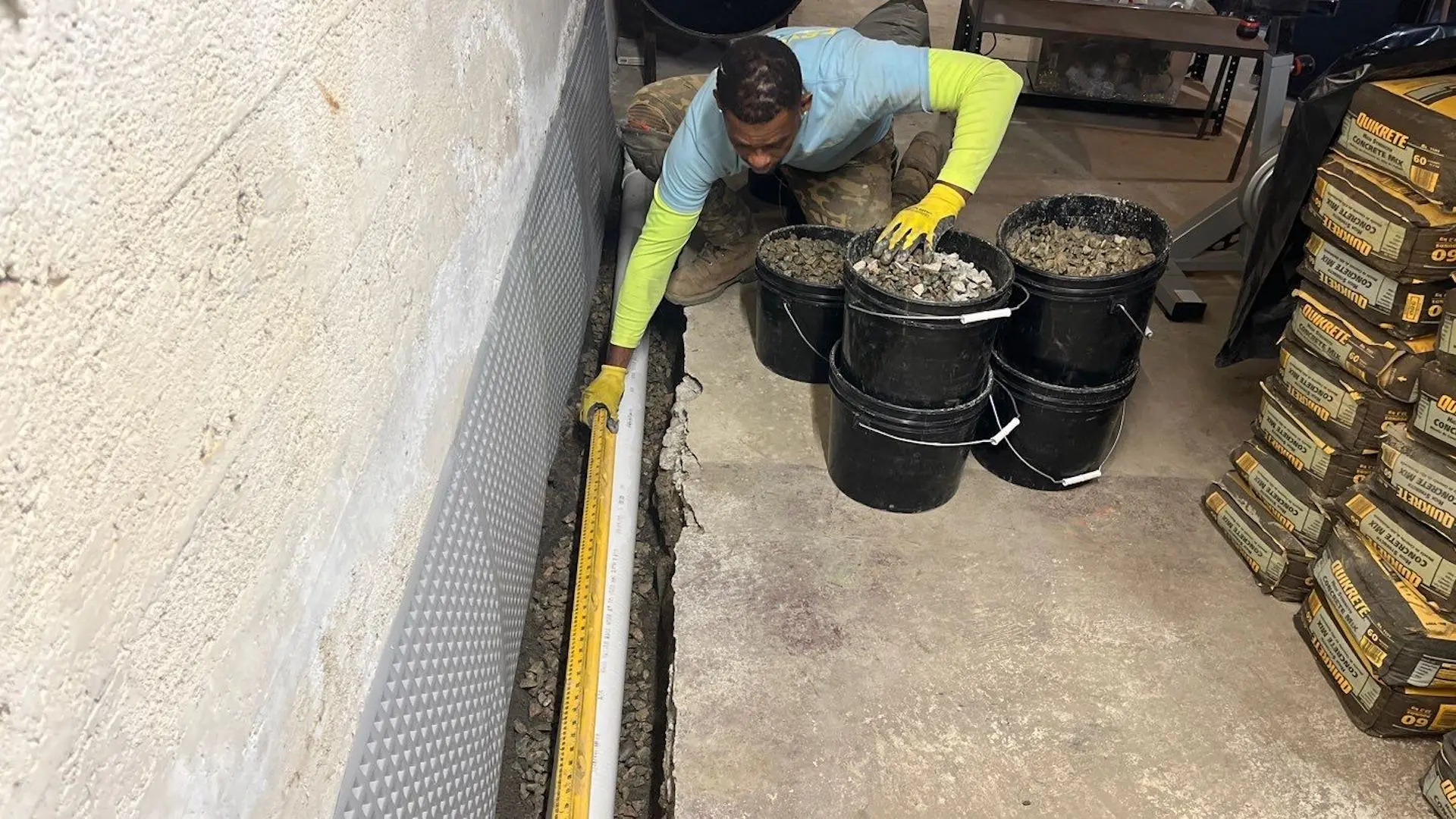
An interior French drain collects water that seeps through basement walls or up through the floor and channels it to the sump pit before it can spread across the floor. Without one, that water has nowhere to go. It is one of the most effective tools for managing hydrostatic pressure in homes with chronic seepage issues.
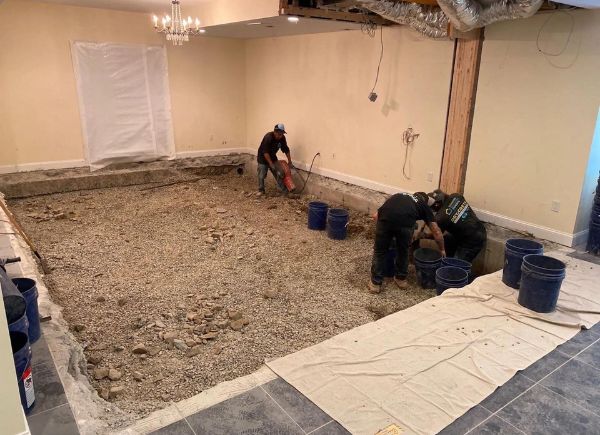
Your concrete slab provides protection from rodents and other pests entering your home, however, proper preparation before pouring your slab can make the difference between a damp and dingy basement, and a dry and conditioned living space. Concrete is porous so it will wick water from the substrate below like a sponge, leaving your basement floor damp. Drycrete can remove your slab, get rid of the damp soil from being in contact with the concrete, put down crushed stone, put down a 14-mill vapor barrier then pour a brand new slab. That way no moisture under the ground has any way of penetrating into that concrete.
In New England summers, humidity alone can make a basement feel damp even when no water is coming through the walls. A properly sized dehumidifier controls moisture levels year-round, prevents mold growth, and keeps the space comfortable and usable.
Cracks in foundation walls let water in and get worse over time as freeze-thaw cycles work on them each winter. Drycrete uses DRY-SEAL 5000, a flexible resin that penetrates the crack and the surrounding concrete to stop the leak and restore the wall. Every crack repair we do is guaranteed for as long as you own the home.
A foundation wall wrap adds a layer of protection against moisture that gets past the exterior of your foundation walls. It works alongside the drainage system to direct water down and away rather than letting it sit against the wall.
A waterproofed basement opens up a part of your home that most people in Eastern Massachusetts and Rhode Island treat as dead space. That changes fast once moisture is no longer a factor.
Some homeowners finish the space entirely. A dry, conditioned basement can become a home office, a gym, a guest bedroom, or a family room that adds real square footage to the house. In markets like Greater Boston where finished square footage carries significant value, waterproofing is often one of the highest-return investments a homeowner can make.
Others just want clean, reliable storage. No more worrying about boxes sitting on a damp floor, no more mold on stored furniture, no more writing off the space as unusable for anything you actually care about.
If you’re planning a renovation or thinking about finishing the basement in the next few years, waterproofing first is the right sequence. Getting the system in before framing and drywall go up is straightforward. Dealing with moisture after the fact is not.
Drycrete will assess your basement and walk you through exactly what it would take to get the space where you want it.
Drycrete has been waterproofing basements across Eastern Massachusetts and Rhode Island for over 30 years. More than 11,000 completed projects. A lifetime guarantee on every crack repair. Solutions built around your home, not a catalog of standard packages.
Homeowners from Boston to Providence call us because we diagnose the problem correctly the first time and install systems that last. Our crews are experienced, our pricing is straightforward, and we stand behind the work we do.
If your basement is wet, damp, or showing early signs of moisture damage, do not wait for the next storm to make it worse.
Call today to schedule your free basement waterproofing estimate.
5.0
Over 800 reviews