Concrete Services in Massachusetts and Rhode Island

Concrete Slabs, Sidewalks, and Walkways Installed with Care

Drycrete Waterproofing installs and replaces concrete slabs, floors, and flatwork for homes throughout Massachusetts and Rhode Island. Whether you need a new basement slab after waterproofing work, a garage floor that drains the right way, or safe, level walkways and steps, our concrete team focuses on work that holds up in New England weather.

Every slab and exterior surface is poured with the details in mind: proper pitch for drainage, the right thickness and reinforcement, and finishes that match how you plan to use the space. The result is concrete that feels solid underfoot, sheds water the way it should, and supports the rest of the improvements you are making to your home.

Basement Concrete Slab replacements

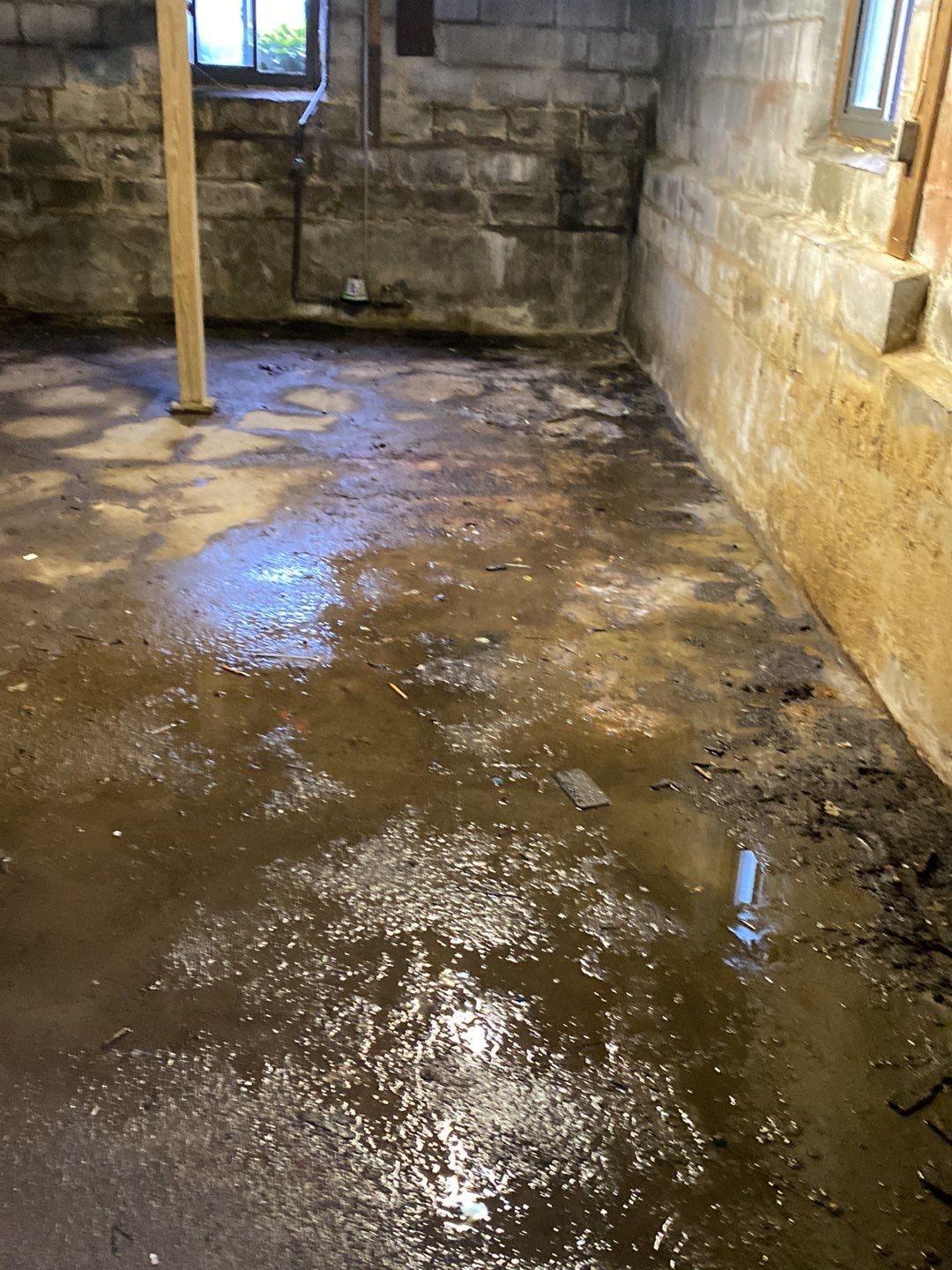
In a lot of older homes in Massachusetts and Rhode Island, the basement floor was poured quickly and simply. Concrete went straight over compacted soil, with no drainage layer or vapor barrier, because the space was only meant for storage and utilities. It worked well enough at the time, but it did not account for what happens when you want that level to stay dry and usable year round.

If your basement smells damp, if cardboard boxes on the floor soften or grow mildew, or if the concrete always feels cold and clammy even without a visible leak, the slab itself may be part of the problem. Moisture from the ground can move up through thin, unprotected concrete and into the air of the basement, feeding odors and surface damage no matter how often you run a dehumidifier.

Replacing the slab gives you a chance to rebuild that surface the right way. Instead of a thin layer of concrete sitting on soil, you get a floor that is tied into your drainage system, protected by a true vapor barrier, and poured to support whatever you want to do downstairs next, from simple storage to full finishing.

How Drycrete replaces your basement slab

Basement slab replacement is more than swapping out old concrete. Drycrete opens the floor up, fixes what is happening underneath, and then rebuilds it so the new slab works with your waterproofing system instead of against it.

Step 1: Remove the old slab completely

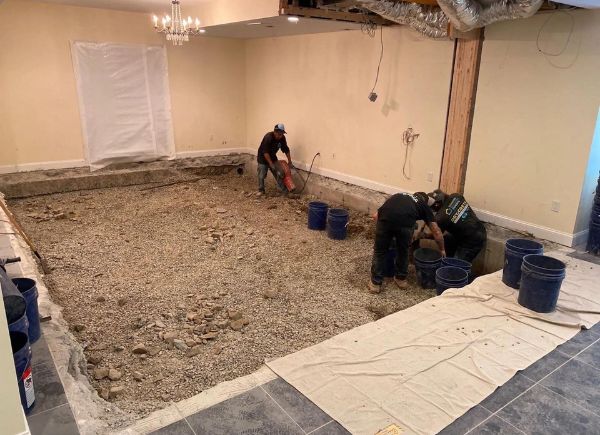
The job starts by breaking up the existing basement floor and taking it out from wall to wall. Drycrete does not just skim over low spots or patch problem areas. The entire slab comes up so the base can be rebuilt the right way.

Step 2: Excavate to the proper depth

With the concrete gone, the crew excavates the subgrade by about six to eight inches. That depth creates space for drainage stone, a vapor barrier, and a full four inch slab without taking more ceiling height than necessary.

Step 3: Install drainage around the perimeter

Along the inside edges of the basement, a trench is cut for a French drain. Crushed stone, drainage piping, and a sump pit are installed so water that collects at the footing has a defined path away from the walls and floor instead of building up under the slab.

Step 4: Add stone and a continuous vapor barrier

Clean crushed stone is spread across the basement to create a stable, well drained base. Over that, Drycrete lays a heavy fourteen mil vapor barrier across the entire floor area. This layer is what stops ground moisture from moving up into the new concrete and into the air of the basement.

Step 5: Pour the new reinforced slab

Once the base and barrier are in place, a new four inch reinforced concrete slab is poured. Zip strips or similar control joints are used to guide where any future movement occurs, so if the concrete ever cracks, it does so along planned lines instead of across the middle of the room.

When the slab cures, you are left with a dry, solid floor that ties into the drainage system below it and is ready for storage, mechanicals, or full finishing.

What you can do with a new basement slab

Once the old slab is out of the way and the new one is tied into proper drainage and a vapor barrier, the basement stops working against you. The floor feels solid, stays dry, and gives you a clean starting point instead of a constant source of damp air and surface damage.

For some homeowners, that means finally being able to use the basement for more than storage. A new slab makes it realistic to plan for a home gym, workshop, office, playroom, or extra bedroom without worrying that moisture from the floor will undo the work. For others, it is about reliable, clean space for laundry, utilities, and long term storage that does not ruin boxes and belongings.

If you do decide to finish the basement later, you are not building over a thin, aging concrete layer sitting on soil. You are starting with a floor that was poured to support real living space, both in strength and in how it handles water and humidity.

The best time to tackle hidden repairs

Pulling out a basement slab exposes parts of the house you normally never see. Instead of waiting for a surprise failure later, you can use that open floor as a chance to deal with buried problems on your own schedule.

Replace aging cast iron sewer lines

Many older homes in Massachusetts and Rhode Island still have cast iron sewage pipes running under the basement floor. Over time, those lines can corrode, clog, or even collapse, but they are hard to reach when the slab is intact. During a slab replacement, they are already exposed. That is the ideal moment to coordinate with your plumber and swap them out before they turn into an emergency.

Upgrade columns and footings while the floor is open

It is also common to find old brick columns or undersized footings supporting the structure above. Those bulky supports can eat into usable space and may not offer the kind of performance you want from a modern system. With the slab removed, Drycrete can work with your contractor to replace outdated brick stacks with steel lally columns and rebuild footings so they carry the load better and free up room in the basement.

Taking care of these hidden issues while the slab is out means you are not just getting a new floor. You are using the project to quietly strengthen the house and clear future problems out of the way.

Bsd Basement Foundation

Garage Slab Replacements

Garage floors in New England take a lot of abuse. Cars bring in road salt, snow, and slush all winter. Meltwater and rain run off the vehicles and sit on the concrete. Freeze–thaw cycles work their way into small surface flaws and expand them over time. If the original slab was poured too thin, without reinforcement, or with the wrong pitch, those conditions show up fast as cracks, low spots, and moisture at the base of the walls.

In many Massachusetts and Rhode Island homes, you see the same patterns: water that runs toward the house instead of out the door, crumbling or flaking concrete near the garage opening, and damp corners where the slab meets the foundation. That does not just look rough, it can also push moisture into framing and make the space harder to use for storage, a workshop, or anything beyond parking.

When Drycrete replaces a garage slab, the focus is on strength and drainage together. The old slab is removed and a new, reinforced floor is poured with the right thickness and slope, so water naturally moves out instead of pooling. If you are planning ahead for radiant floor heat or a more finished space in the future, the slab can be prepared to support those plans. The result is a surface that feels solid under vehicles, sheds water the way it should, and holds up to years of New England weather without constant patching.

Exterior Concrete Walkways, Patios, and Steps

Outside the house, concrete has to deal with the same New England weather as everything else: winter freeze, spring thaw, heavy rain, and summer heat. When walkways crack, patios settle, or front steps start to crumble, it is not just a cosmetic issue. It can create tripping hazards, drainage problems, and spots where water sits against the house instead of moving away from it.

Drycrete pours exterior concrete for homes across Massachusetts and Rhode Island with that in mind. Surfaces are graded so water runs where it should, reinforced to handle movement, and finished in a way that fits how you actually use the space.

Walkways and Sidewalks:

A good walkway feels solid and drains cleanly. When Drycrete replaces or installs walks, the focus is on a smooth, well pitched path that sheds water and stands up to frost cycles. Cracked or heaved sections are removed, the base is rebuilt, and new concrete is poured so you are not dealing with the same trip points and puddles year after year.

Patios:

A concrete patio adds usable space right outside the door, whether you keep it simple or choose a stamped finish. Drycrete shapes each slab to match the yard and the way you plan to use it, from a small sitting area to a larger space for cooking and gathering. Reinforcement and finish are chosen so the surface feels comfortable underfoot and holds up to furniture, foot traffic, and weather.

Stairs, Steps, and Stoops:

Front steps and stoops have to be both safe and welcoming. When Drycrete rebuilds these, the rise and run of each step are set to feel consistent, with clean edges and solid landings. The work is done with code, drainage, and daily use in mind, so the entry holds up without loose treads, shifting corners, or water trapped where it meets the house.

Why Homeowners Trust Drycrete with concrete

Concrete is only as good as the planning that goes into it. For Drycrete, that means looking at drainage, base preparation, and how you plan to use the space before any forms go in or trucks show up. Basement slabs, garage floors, walks, patios, and steps are all tied back to the same priorities: shed water the right way, stay solid under everyday use, and support the other work you are investing in around your home.

Because Drycrete also handles waterproofing and interior drainage, the concrete is never treated as a stand-alone cosmetic upgrade. Slabs are poured to work with sump systems and French drains, garage floors are pitched to keep meltwater moving out, and exterior flatwork is graded to keep water away from the foundation. The goal is concrete that looks clean on the surface and quietly does its job underneath.

Need a Concrete Contractor in massachusetts and rhode island?

If you are dealing with a damp, uneven basement floor, a failing garage slab, or exterior concrete that has become a trip hazard, it may be time to look at a full replacement instead of another patch. Drycrete Waterproofing can walk the space with you, explain what is happening, and outline what a proper concrete solution would involve.

Reach out to request a quote for concrete work in Massachusetts or Rhode Island. You will get a straightforward assessment and a plan built around drainage, durability, and how you actually want to use the space, so the new concrete feels like a real upgrade, not just a fresh surface.

Our Featured Work

Look at some of the projects we recently worked on.

Over 11,000 Appreciative Customers

Reviews

5.0

5/5

Over 800 reviews