Front steps and sidewalks take more abuse than most concrete on a property. They carry foot traffic every day, sit exposed to whatever New England throws at them, and have no shelter from freeze-thaw cycles that work into every small crack and gap. When that concrete starts to fail, it does not just look rough. It becomes a tripping hazard, a drainage problem, and in the case of front steps, a safety issue at the main entry to your home.


Drycrete pours and replaces exterior sidewalks and front steps for homeowners across Massachusetts and Rhode Island. The focus is the same as it is on every concrete job: proper base preparation, correct pitch for drainage, and reinforcement that holds up to real use and real weather.
Deteriorating sidewalks and front steps put everyone who approaches your home at risk. Family members navigate the same cracked corner or lifted edge every day without thinking about it. Guests who are unfamiliar with the property have no reason to watch for it, and delivery drivers carrying packages to the door are focused on where they are going, not where they are stepping.
When someone trips and falls on your property, the legal and financial exposure falls on you as the homeowner. Beyond guests and visitors, postal workers and delivery personnel who are injured on a property can pursue claims against the homeowner. Deteriorating concrete at the entry to your home is one of the more avoidable liability risks a homeowner carries.
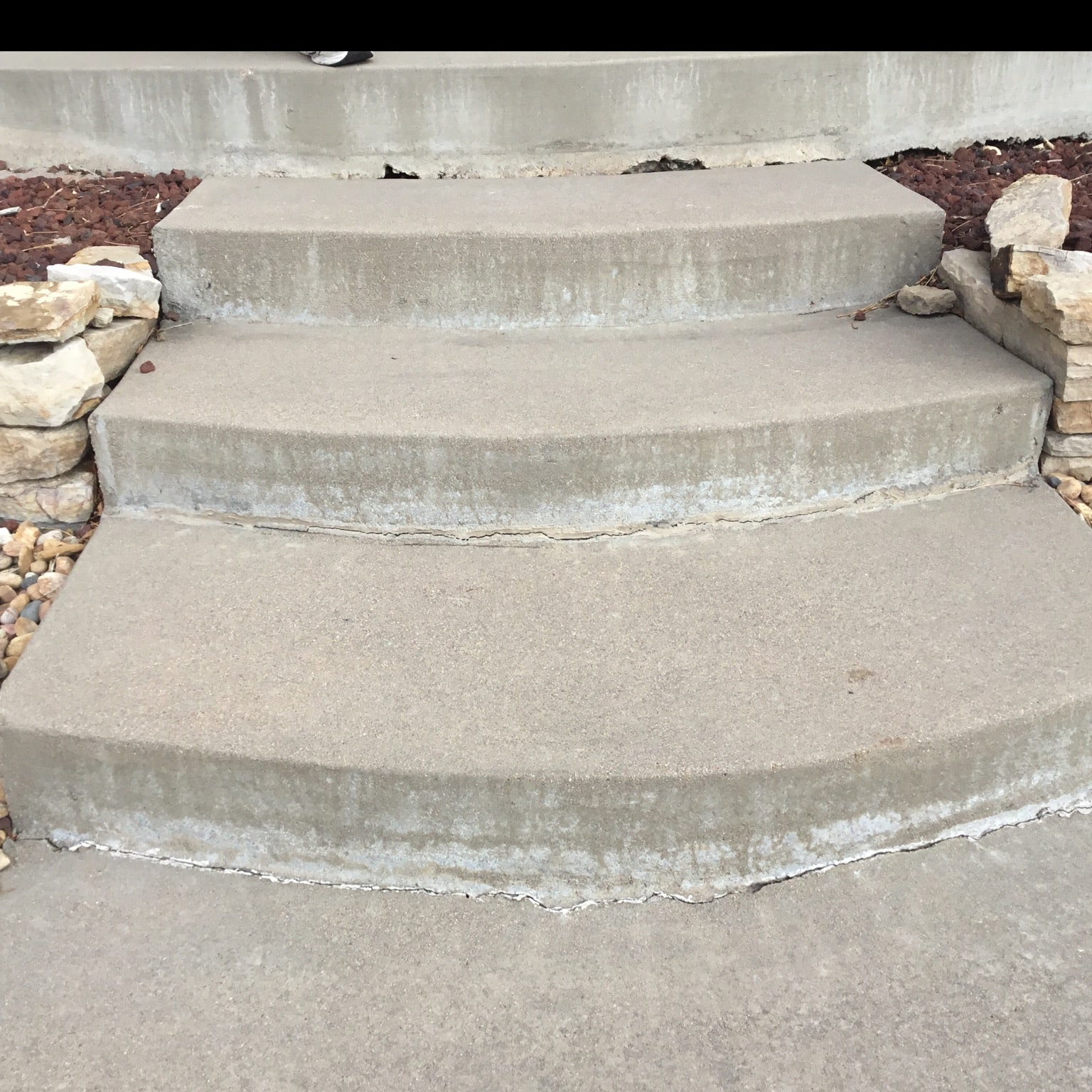
The damage to property is real too. Uneven walkways that drain toward the house direct water against the foundation with every rain. Front steps that have separated from the foundation create a gap where water collects, freezes, and widens the separation season after season. What looks like a cosmetic problem on the surface is often actively making conditions worse underneath
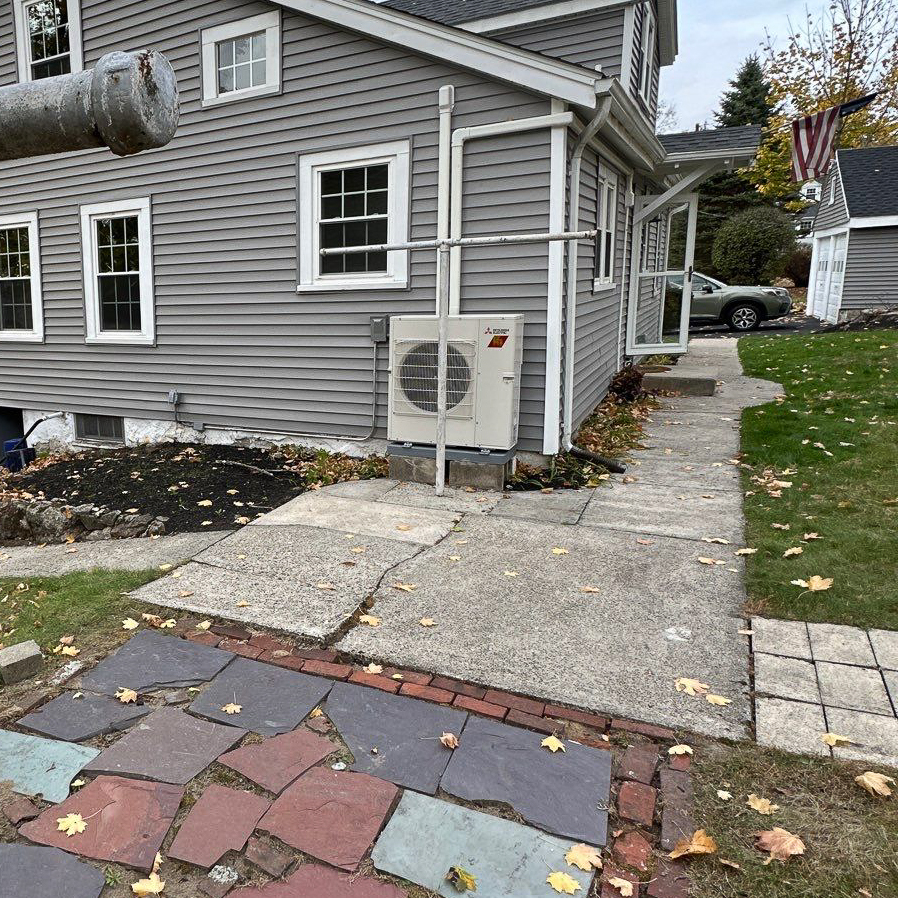
Cracked, heaved, or uneven sidewalks are one of the most common concrete problems in New England. Frost pushes sections up, tree roots shift slabs, and poor drainage from the original pour accelerates the damage. What starts as a hairline crack becomes a lifted edge, and a lifted edge becomes a fall waiting to happen.
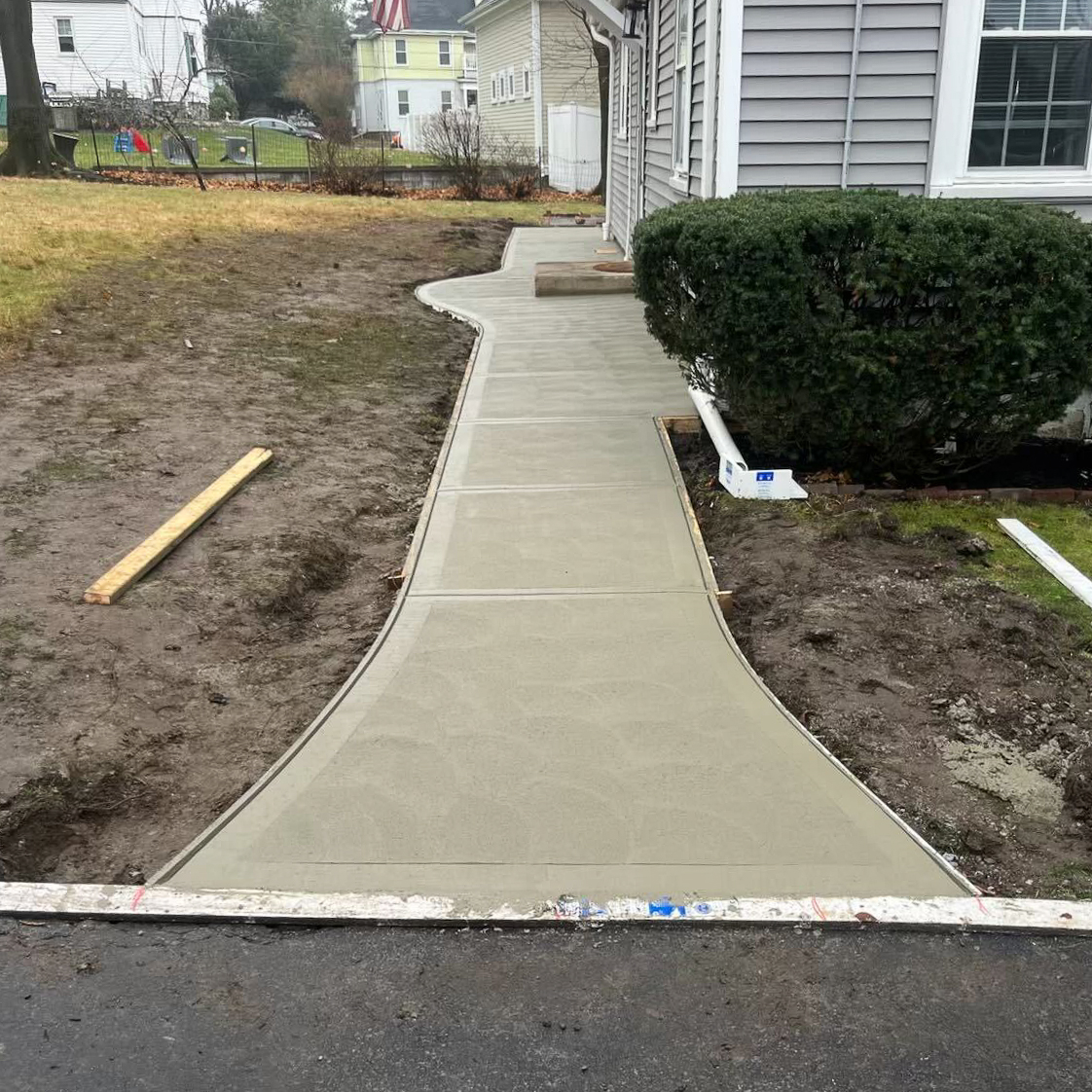
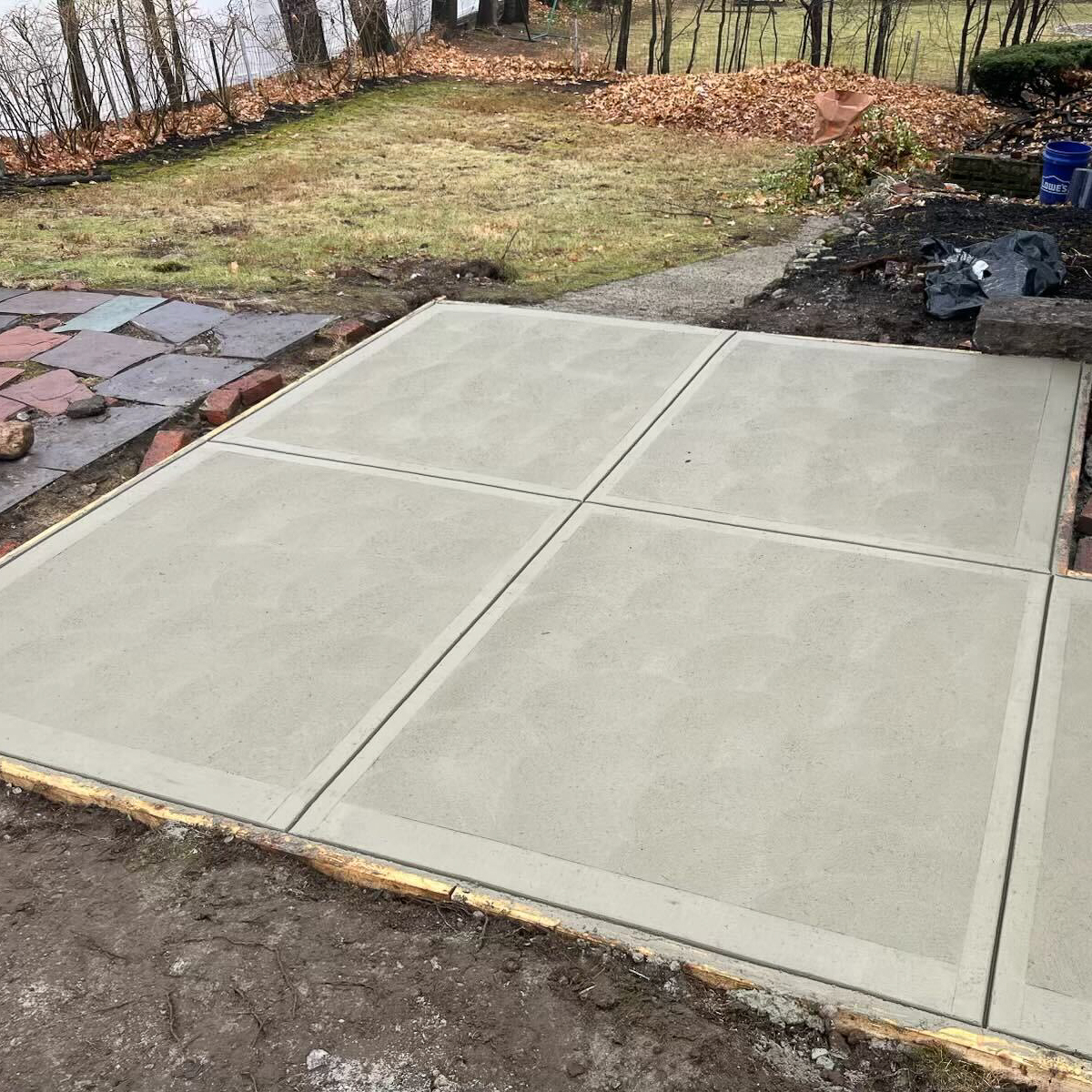
When Drycrete replaces a sidewalk or walkway, the failing sections are removed completely rather than patched over. The base is rebuilt so it drains and supports the new concrete properly, and the slab is poured with the right pitch so water moves away from the house and off the walk instead of sitting on the surface or pooling against the foundation. Control joints are placed so future movement, if any, happens predictably rather than through the middle of a slab.
The result is a walk that feels solid, sheds water cleanly, and does not present the same trip hazards that prompted the replacement in the first place.
If your property does not have a defined walkway from the street or driveway to the front door, a concrete path makes that connection permanent and low maintenance. Drycrete grades and pours new walks to fit the layout of your yard, with attention to how water will move across and away from the surface. A well-planned walk also keeps foot traffic off the lawn and reduces the tracked-in mud and grass that an informal path creates.
Front steps fail in ways that are hard to ignore. Corners chip and crumble, risers crack along the face, surfaces pit and scale from road salt and freeze-thaw damage, and entire sections can shift when the base beneath them settles or washes out. Beyond the appearance, failing steps are a genuine safety concern, especially for older family members or anyone carrying something through the front door.
Drycrete rebuilds front steps and stoops with consistent rise and run, clean edges, and proper drainage away from the foundation. The base is prepared so the new work does not repeat the settlement or erosion problems that led to the replacement. Landings are formed and poured to drain, and the connection where steps meet the foundation is finished so water does not sit and work its way in.
For homes with deteriorated wood steps, homes being reclad or renovated, or situations where no formal entry exists, Drycrete can form and pour new concrete steps from scratch. Steps are sized and designed to meet code requirements for rise and run, built to suit the height of the entry, and finished to match the scale of the house. A concrete entry holds up to decades of daily use without rotting, warping, or requiring the seasonal maintenance that wood demands.
The cost of a new walkway depends on several factors: the size and length of the walkway, the amount of demo work needed, how accessible the site is, and any specific finish or style you choose.
We’ll give you a clear, detailed estimate before work begins—no hidden fees or guesswork. A member of our team will walk your property, answer your questions, and explain the costs so you can make an informed decision.
If you’re looking for a walkway contractor near you that values transparency and craftsmanship, Drycrete is ready to help.
Exterior concrete in Massachusetts and Rhode Island has to handle a specific set of conditions. Road salt tracked in from driveways and sidewalks accelerates surface damage. Frost penetrates deep enough to heave poorly supported slabs and separate steps from their bases. Spring thaw saturates the ground quickly, and concrete that drains poorly sits in standing water through the wettest months of the year.
Getting it right means starting with the base, not the surface. Drycrete approaches every exterior concrete job the way it approaches basement slabs and garage floors: drainage first, reinforcement second, finish third. The goal is concrete that looks clean on the day it is poured and is still performing the same way years later.
If your sidewalk has become a trip hazard, your front steps are crumbling, or you want to add a proper concrete entry to your home, Drycrete can walk the property with you and put together a straightforward plan.
Request a free quote for exterior concrete work in Massachusetts or Rhode Island.
5.0
Over 800 reviews