Why New England Snowmelt Is One of the Worst Things That Can Happen to Your Basement
New England winters accumulate. Snow builds up on the ground for months, and when temperatures finally climb in March and April, that entire season’s worth of water releases at once. A heavy rainstorm might drop two inches in an afternoon. Snowmelt can deliver that same volume day after day for weeks, into ground that is still partially frozen and can’t absorb it fast enough. The water has to go somewhere, and for a lot of basements in Massachusetts and Rhode Island, it goes inside.
What Snowmelt Does to Basement Walls
Foundation walls take the most direct pressure during snowmelt season. As saturated soil builds up against the exterior, water looks for any path through. Older poured concrete and block foundations, which are common throughout Massachusetts and Rhode Island, are particularly vulnerable. Existing cracks and mortar joints that stayed dry all winter suddenly have sustained pressure behind them. A wall that showed no signs of seepage in December can be actively leaking by March.
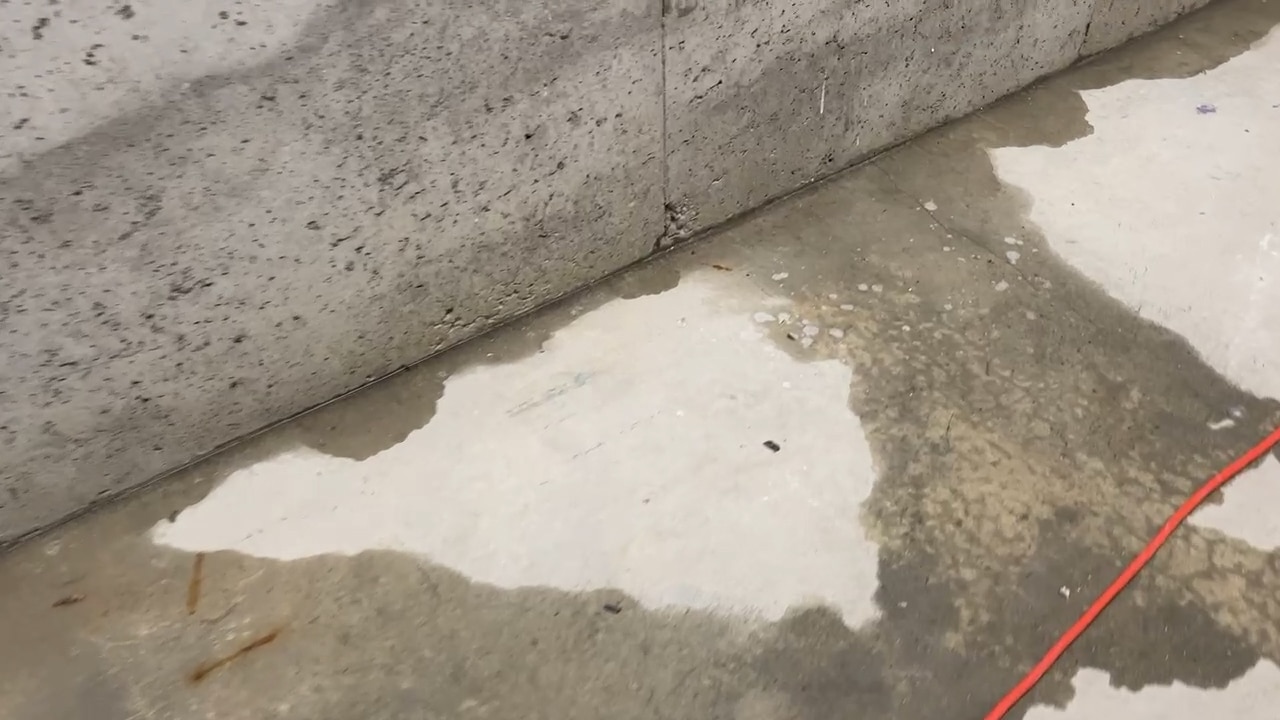
Homeowners often notice water appearing along the base of the wall, at floor joints, or seeping through cracks that may have been there for years without causing visible problems. The water was always looking for a way in. Snowmelt season is when it finds one.
What Happens When Snowmelt Gets In
Water that enters a basement during snowmelt season doesn’t just create a wet floor. Sustained moisture raises the humidity level in the space, and chronically high humidity is what drives mold growth on wall framing, floor joists, and stored belongings. In finished basements, it works into drywall and insulation before it becomes visible. The damage that follows depends on how long the water has been getting in and how much of the structure it has reached:
- Mold and mildew on framing, insulation, and stored items
- Deteriorating mortar joints and widening foundation cracks
- Damaged drywall, flooring, and insulation in finished spaces
- A sump pump running beyond its capacity and wearing out ahead of schedule
A pump that runs continuously without keeping pace with incoming water is working beyond what it was sized for. Left in that condition season after season, it fails earlier than it should, often at the worst possible time.
How Drycrete Can Help
The damage snowmelt causes doesn’t reverse itself between seasons. A crack that let water in this spring will let in more next spring unless it gets addressed. Mold that took hold in March doesn’t disappear when the ground dries out in June. Waiting adds to what the next repair will involve.
Drycrete handles the full range of problems snowmelt season creates. Foundation crack injection stops water at the point of entry before it has time to widen the opening further. Interior French drain systems relieve the hydrostatic pressure building against the wall by giving water a managed path to a sump basin. For basements where the existing sump pump struggled to keep up this spring, an upgrade or a battery backup system ensures the next heavy season doesn’t catch the home unprepared.
Drycrete has been waterproofing basements across Massachusetts and Rhode Island for over 30 years. If this spring puts your basement to the test, a free inspection will show exactly where the water is getting in and what it will take to stop it.