
Quick Summary
- Snowmelt and spring rainfall arrive simultaneously in New England, hitting foundations when the ground is still partially frozen and can’t absorb water fast enough.
- Clay-heavy soil across eastern Massachusetts and Rhode Island holds water against foundation walls for days or weeks after a storm, long after most homeowners assume the risk has passed.
- Winter freeze-thaw cycles widen existing foundation cracks, and those cracks become active water entry points when spring hydrostatic pressure builds.
- Sump pumps face their highest demand of the year during spring thaw and can be overwhelmed by the volume of water moving through saturated ground.
- Homes with recurring spring water problems often need a drainage solution that manages water before it reaches the sump basin, not just a more powerful pump.
Spring Thaw and Your Basement: What Massachusetts and Rhode Island Homeowners Should Watch For
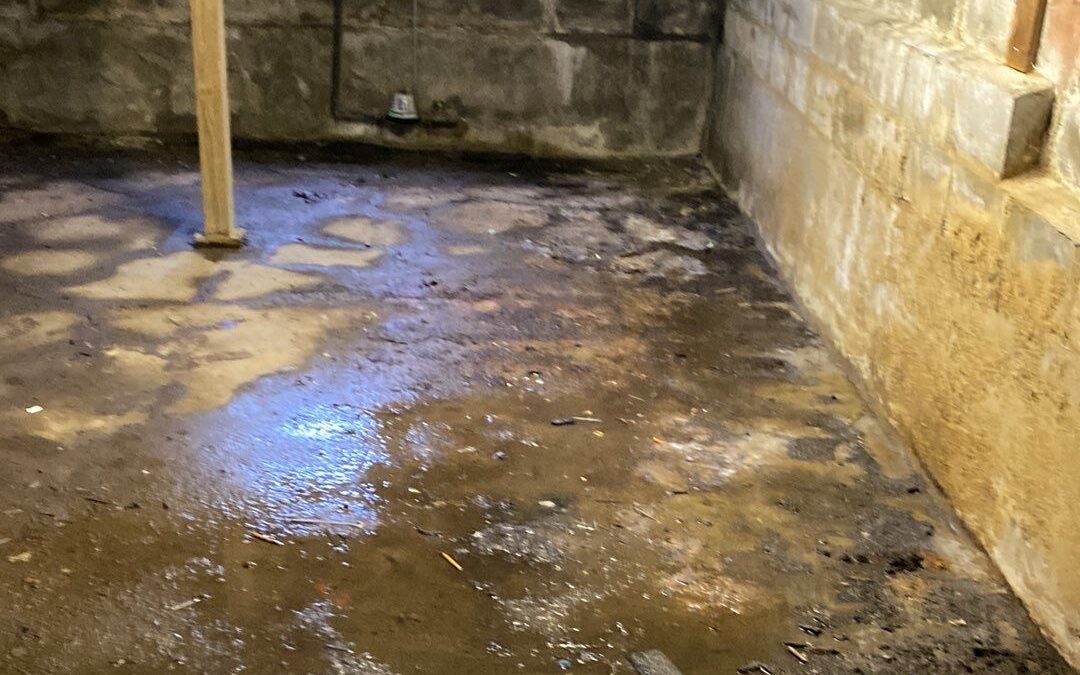
March and April are the months when basements that stayed dry all winter start showing problems. The ground in Massachusetts and Rhode Island freezes deep over the winter, and when it thaws, it releases a significant amount of water in a short window. That water has to go somewhere, and for many homes in the region, some of it ends up in the basement. Knowing what to look for during the thaw season, and what the signs actually mean, can help you get ahead of a problem before it turns into a significant repair.
Snowmelt and Spring Rain Arrive at the Same Time
Massachusetts and Rhode Island get hit from two directions in spring. Snowpack that accumulated over winter starts releasing water as temperatures climb, and spring rainfall arrives at the same time rather than after the ground has had a chance to drain. The soil is still partially frozen several inches down in March and early April, which limits how much water it can absorb. What doesn’t absorb runs toward the lowest point it can find, and for homes with basements, that’s often the foundation.
The volume of water moving through the ground during a wet New England spring is significantly higher than what the same soil handles during a summer rainstorm. A single heavy rain in July drains relatively quickly. The same rain in March lands on ground that’s already holding as much water as it can from weeks of snowmelt, and the pressure against foundation walls reflects that.
Clay Soil Keeps Water Against the Foundation Longer Than Homeowners Expect
Sandy or loamy soil drains reasonably well after a wet stretch. Clay-heavy soil, which is common across much of eastern Massachusetts and Rhode Island, holds water instead. When clay becomes saturated, it stays that way for days or weeks after the rain has stopped. That sustained contact between wet soil and a foundation wall is what separates a basement that gets damp during a storm from one that stays damp well into May.
The problem is that many homeowners assume the risk passes once the rain stops or the snow is gone. In clay-heavy ground, the soil around the foundation can remain saturated long after the weather has moved on. That extended pressure is what pushes water through existing cracks, forces moisture through porous concrete, and keeps sump pumps running long after a storm event has ended.
How Winter Widens Foundation Cracks
Water gets into existing cracks, freezes, expands, and forces them slightly wider. That cycle repeats throughout winter, and by March, cracks that were stable in October have opened enough to let water through under pressure. A basement that stayed dry through previous springs can develop leaks without any obvious change in the home or the weather. The crack simply reached a threshold where it can no longer hold back saturated spring soil.
Poured concrete walls and older stone or block foundations both go through this process, just differently. Either way, the result is the same: an entry point that wasn’t there before, or one that’s now significantly more active. Foundation crack repair closes that entry point before another winter cycle widens it further.
When Sump Pumps Get Overwhelmed in Spring
Spring thaw puts more demand on a sump pump than any other time of year. Snowmelt and rainfall arrive together, the ground is already saturated, and the pump runs more or less continuously rather than cycling on and off as it would during a summer storm. That sustained workload is different in kind from what the pump handles the rest of the year.
A pump that can’t keep pace means water backs up into the basin and eventually into the basement. Testing the pump before thaw season and confirming the discharge line is clear and draining away from the foundation are both worth doing in February rather than March. Homes that experience recurring spring flooding despite a functioning pump often have a capacity problem that a French drain system can address by managing water before it reaches the basin.
Get a Free Basement Waterproofing Quote Before the Next Thaw Season
Spring water problems in Massachusetts and Rhode Island basements are predictable, but they aren’t inevitable. The conditions that cause them, saturated clay soil, widened cracks, overwhelmed drainage systems, are all addressable before the next thaw arrives. Contact Drycrete Waterproofing for a free quote and find out what your basement actually needs to stay dry through spring.